Truck Traffic Restrictions in Slovakia 2026.
Regulations, calendar, guide.

Planning transportation through Slovakia requires special attention, as there are truck traffic bans in effect on certain days and at certain times, and violating these bans can result in an inspection, a fine, and a mandatory stop. The schedule is most significantly affected by truck traffic bans in Slovakia on Sundays and holidays, as well as additional restrictions during the summer season, which can block transit through key corridors. In practice, you must take into account both general truck traffic bans in Slovakia and local truck traffic restrictions on specific road segments.

This guide compiles the most important rules for 2026—specifically, truck traffic restrictions in Slovakia. We explain who is affected by truck traffic bans and when these bans are in effect in Slovakia, including typical holiday bans, weekend bans, and seasonal summer vacation bans on trucks in Slovakia.

Get a Quote for Your Shipping Cooperation with carriers
Truck Traffic Restrictions in Slovakia

Truck Traffic Restrictions in Slovakia in 2026

Slovakia follows a moderate system typical of Central Europe, which is why the truck traffic ban there has a predictable structure. The standard truck driving ban in Slovakia on Sundays and holidays runs from 00:00 to 22:00 (similar to Germany, the Czech Republic, and Poland), which leaves carriers a short window from 10:00 PM to midnight to begin their journey on Sunday evening. The weight limits are in line with regional practice: 7.5 metric tons for single-unit vehicles and 3.5 metric tons for truck-trailer combinations and tractor-trailers, so in practice, truck traffic bans in Slovakia also cover a significant portion of transport operations, which the industry refers to as “HGV traffic bans” and “HGV traffic bans in Slovakia.” An important difference compared to Poland is that traffic bans in Slovakia apply mainly on highways, international roads, and Class I national roads, whereas on local roads, truck traffic is sometimes permitted even on Sundays and holidays, which increases flexibility for local routes and when planning detours when additional truck traffic restrictions arise in Slovakia.

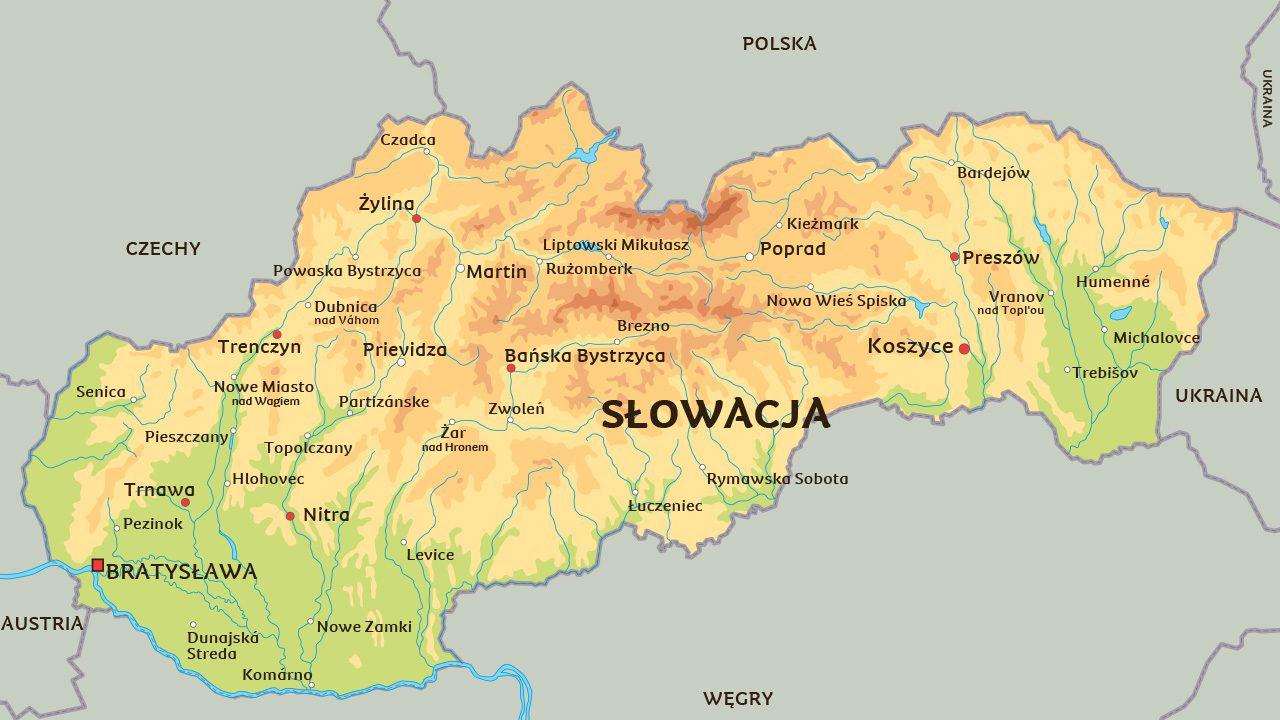
Slovakia plays a key role in Central Europe’s transit transportation, as major transportation corridors connecting Poland with Hungary (the D1 highway between Žilina and Košice), the Czech Republic with Ukraine (the D1 Brno–Michalovce highway), and Austria with Ukraine (the D2/D1 Bratislava–Košice highway). In 2024, 8.2 million transit trucks traveled through the Slovak highway network, of which 62% were on the north-south route (Poland–Hungary) and 38% on the east–west route (Czech Republic–Ukraine). Slovakia’s ban system is more lenient than Austria’s (which has a Saturday ban from 3:00 PM to midnight year-round) and more restrictive than the Czech Republic’s (where the Sunday ban does not begin until 1:00 PM). The only additional restriction is a Saturday ban during the summer season, from July 1 to August 31, between 7:00 a.m. and 7:00 p.m., which is intended to reduce traffic on tourist routes in the Tatra and Low Tatra Mountains during the peak of the summer vacation season.

Legal Basis for Traffic Restrictions in Slovakia

Truck traffic restrictions in Slovakia are regulated by Act No. 8/2009 Z. z. on Road Traffic (Road Traffic Act) and Decree No. 30/2020 Z. z. (an implementing regulation of the Ministry of Transport). The Slovak system was introduced in stages: the Sunday ban has been in place since the 1990s, following the separation from Czechoslovakia, and the summer Saturday ban has been in effect since 2015. The objectives are to protect Sunday rest (nedel’ný odpočinok), improve safety in tourist traffic, and reduce emissions and noise in recreational areas, particularly in the mountainous regions of the Tatras, Low Tatras, and Slovak Paradise. The bans apply uniformly throughout the country without regional variations.

Sunday and Holiday Driving Ban (Zákaz jazdy v nedele a sviatky)

The Sunday ban—that is, the ban on traffic and on trucks driving in Slovakia—is in effect every Sunday throughout the year from 12:00 a.m.to 22:00. This gives carriers a 2-hour window from 22:00 to 24:00 to begin their journey on Sunday evening, which facilitates transit to the Czech Republic, Poland, or Hungary. This truck traffic ban in Slovakia applies to trucks >weighing 7.5 metric tons and combinations >weighing 3.5 metric tons (tractor-trailers, vehicles with trailers), which, in practice, also covers typical truck traffic restrictions in Slovakia. It applies exclusively to highways (diaľnice D1, D2, D3, D4), expressways (rýchlostné cesty R1–R7), and international and Class I national roads (cesty I. triedy); on local Class II and III roads, traffic is permitted even on Sundays.

An identical traffic ban from 12:00 a.m. to 10:00 p.m. applies on 15 national holidays as part of Slovakia’s holiday truck traffic bans. Of these, 13 are non-working holidays, and 2 holidays (October 28 and November 17) will be working days starting in 2025, but the traffic ban will still apply.

DATE 2026DAY OF THE WEEKNAME OF THE HOLIDAY (IN SLOVAK)HOURS OF THE BAN
January 1ThursdayDay of the Establishment of the Slovak Republic12:00 a.m. – 10:00 p.m.
January 6TuesdayEpiphany (Three Kings Day)12:00 a.m. – 10:00 p.m.
April 3FridayGood Friday12:00 a.m. – 10:00 p.m.
April 6MondayEaster Monday12:00 a.m. – 10:00 p.m.
May 1FridayLabor Day12:00 a.m. – 10:00 p.m.
May 8FridayVictory Day over Fascism12:00 a.m. – 10:00 p.m.
July 5SundayFeast of Saints Cyril and Methodius12:00 a.m. – 10:00 p.m.
August 29SaturdayAnniversary ofthe Slovak National Uprising12:00 a.m. – 10:00 p.m.
September 1TuesdayConstitution Day of the Slovak Republic12:00 a.m. – 10:00 p.m.
September 15TuesdayFeast of Our Lady of Sorrows (patron saint of Slovakia)12:00 a.m. – 10:00 p.m.
October 28WednesdayDay of the Founding of the Independent Czechoslovak State (Czechoslovakia’s Independence Day, 1918)12:00 a.m. – 10:00 p.m.
November 1SundayAll Saints’ Day12:00 a.m. – 10:00 p.m.
November 17TuesdayDay of the Struggle for Freedom and Democracy (Velvet Revolution, 1989)12:00 a.m. – 10:00 p.m.
December 24ThursdayŠtedrý deň (Christmas Eve)12:00 a.m. – 10:00 p.m.
December 25FridayChristmas Day (First Day of Christmas)12:00 a.m. – 10:00 p.m.
December 26SaturdayBoxing Day (St. Stephen’s Day)12:00 a.m. – 10:00 p.m.
NOTE: Starting in 2025, the holidays on October 28 and November 17 are no longer non-working days, but the traffic ban still applies!
All Sundays in 2026 are subject to the ban from 12:00 a.m. to 10:00 p.m. (52 Sundays)

Saturday Ban During the Summer Season

In addition, during the summer season from July 1 to August 31, a Saturday driving ban is in effect from 7:00 a.m. to 7:00 p.m. on the same roads (highways, expressways, and Class I roads). This ban is intended to relieve congestion on tourist routes during the peak vacation season, when passenger traffic heading toward the Tatra Mountains, the Low Tatras, and the Slovak lakes increases by 150–200%. In 2024, on Saturdays in July and August, the D1 and R1 highways recorded passenger traffic volumes of 95,000–120,000 vehicles per day, while on other Saturdays of the year, the average was 45,000–60,000. The Saturday ban applies to 9 Saturdays in 2026: July 4, July 11, July 18, July 25, August 1, August 8, August 15, August 22, and August 29.

PERIODDAYSHOURSROADS COVERED
July 1 – August 31, 2026Every Saturday (9 Saturdays)7:00 a.m. – 7:00 p.m.D1–D4 highways, R1–R7 expressways, international and Class I national roads
List of Saturdays subject to the ban in 2026: July 4, July 11, July 18, July 25, August 1, August 8, August 15, Aug. 22, Aug. 29
After 7:00 p.m. on Saturday, traffic is permitted until midnight on Sunday (a 5-hour time window: 7:00 p.m.–midnight)

Official sources and links to current regulations:
Ministry of Transport and Construction of the Slovak Republic
Ministry of the Interior of the Slovak Republic – Ministry of the Interior (Traffic Police)
Act No. 8/2009 Z. z. on Road Traffic – Road Traffic Act

Prohibitions under the regulation versus restrictions indicated by signs

In Slovakia, truck traffic restrictions are based not only on the calendar but also on local signs on specific road sections; therefore, a traffic ban may apply even when general truck traffic bans in Slovakia are not in effect on a given day. Even if regulations state that “you can drive,” a sign at the entrance to a city, on a bridge, or on a road with a weight limit may impose a local truck ban, block your route, or force you to take a detour. This applies especially to travel through urban areas and delivery zones, where truck bans and weight restrictions occur most frequently and have a real impact on trip planning.

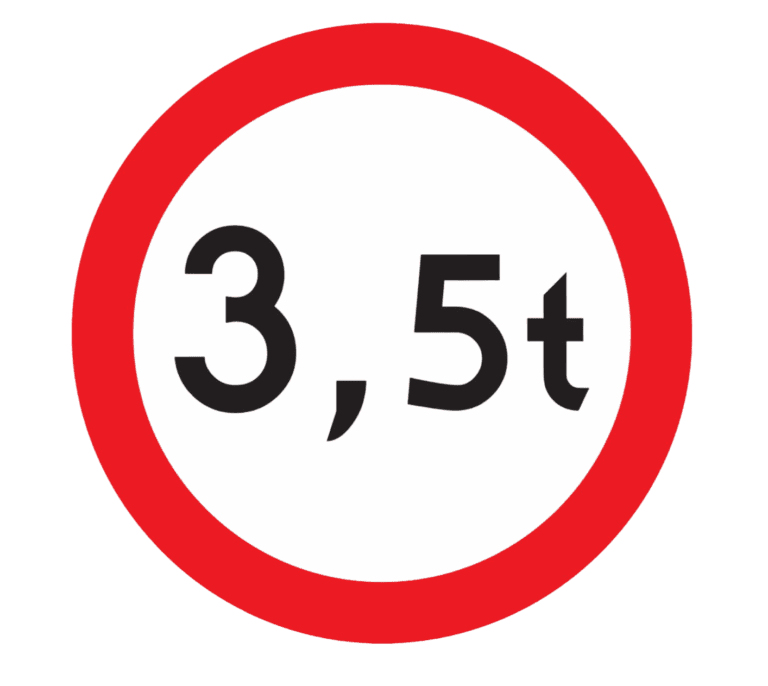
Weight weight

Vehicles with an actual gross weight exceeding the value shown on the sign are prohibited from entering (the actual weight is what counts here, not just the gross vehicle weight rating).

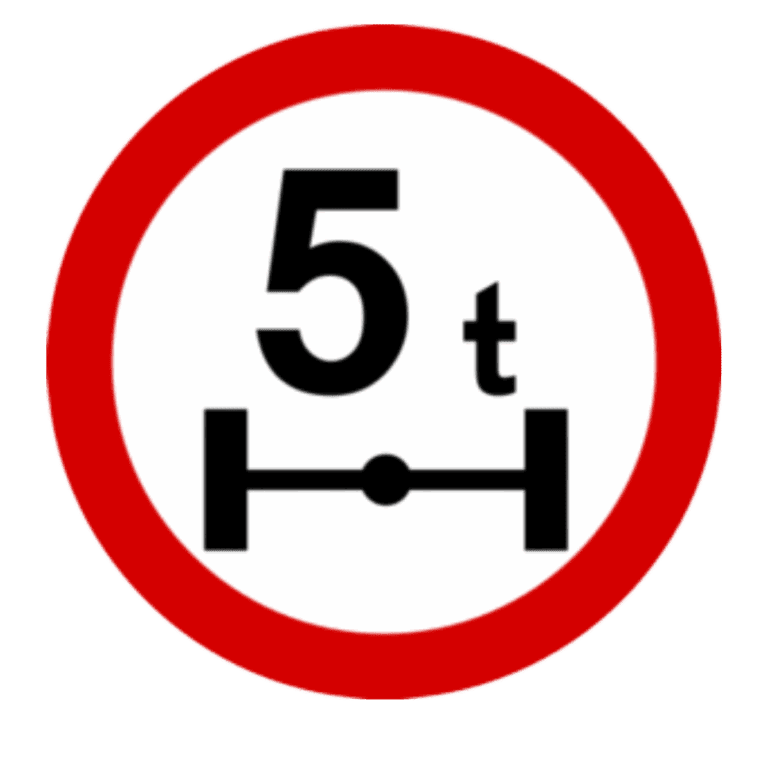
B-18

Axle Load Limit

No entry for vehicles with an axle load greater than the value indicated on the sign (common on bridges and sections with limited load-bearing capacity).

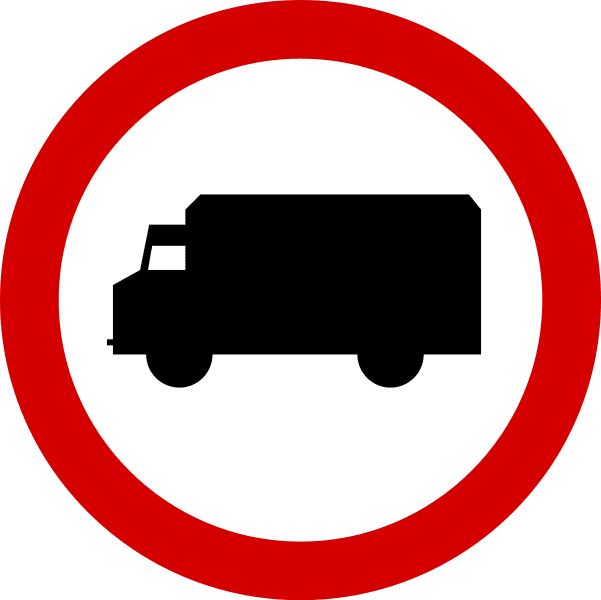
B-19


: No Entry for Trucks

No entry for trucks (by definition, this includes trucks with a gross vehicle weight rating (GVWR) of more than 3.5 metric tons; the weight is often specified on the sign).

Truck Traffic Ban

Penalties for Violating Traffic Restrictions in Slovakia

The penalty system in Slovakia is moderately strict compared to Western Europe. For violating truck traffic restrictions, including the ban on truck traffic in Slovakia and typical restrictions on heavy-duty trucks in Slovakia, the carrier is issued an administrative fine (bloková pokuta) in the amount of 200–500 EUR, imposed by the traffic police (Dopravná polícia) at the scene of the inspection. In the case of more serious violations or repeat offenses, the case is referred to the Okresný dopravný inšpektorát (district transport inspectorate), which may impose an administrative fine (správny delikt) of up to 1,500 EUR on the driver and up to 3,000 EUR on the business operator who ordered or authorized the trip despite a ban on truck traffic in Slovakia. The Slovak system does not impose penalty points for violating traffic bans in Slovakia, but repeated violations may result in a ban on transport operations (zákaz prevádzkovania dopravy) for a period of 3–12 months.

The penalties for violating the summer Saturday ban are slightly lower: a fine of 150–350 EUR for the driver and an administrative penalty of up to 1,000 EUR for the business owner. Slovakia applies the principle of dual liability (dvojitá zodpovednosť)—the penalty may apply to both the driver performing the trip and the business that commissioned it, but the total penalty may not exceed five times the maximum rate for the driver. In practice, this means that for a single violation of the Sunday or holiday driving ban—including, for example, the holiday truck ban in Slovakia and the weekend truck ban in Slovakia—the maximum total fine is 2,500 EUR (500 EUR for the driver + 2,000 EUR for the operator, not exceeding the cap of 500 x 5 = 2,500 EUR).

TYPE OF VIOLATIONFINE FOR THE DRIVERPENALTY FOR THE BUSINESS OWNER
Rides on Sunday (12:00 a.m.–10:00 p.m.)200–500 EURUp to 3,000 EUR
Rides on holidays (12:00 a.m.–10:00 p.m.)200–500 EURUp to 3,000 EUR
Ride on a summer Saturday (7:00 a.m.–7:00 p.m.)150–350 EURUp to 1,000 EUR
Lack of exemption documentation for authorized transport100–250 EURUp to 500 EUR
Repeated violations (3 or more per year)Possible suspension of transport operations for 3–12 months

The Most Common Mistakes and Pitfalls During Traffic Stops in Slovakia

1

No documents confirming the exemption

Without the CMR and documents from the shipper, the exception usually won’t be approved.
Keep the CMR, the order/notification, and the shipping document/specification (with the loading/unloading address) on hand so you can immediately show the purpose of the trip.

2

Inaccurate description of the cargo in the CMR

General descriptions make it difficult to determine whether the shipment actually meets the conditions for the exception.
The CMR should include the name of the goods, the quantity, and the weight; a specification or packing list is also helpful.

3

Temperature-controlled transport with no data

For sensitive cargo, transport conditions—especially temperature—are critical. It is a good idea to have a specification sheet with temperature requirements and a printout or record from the temperature logger, if one is used.

4

ADR without a complete set of documents

For ADR shipments, exemptions may depend on the completeness of the documentation and the compliance of the labeling.
As a general rule, an ADR waybill, written ADR instructions, and a valid ADR driver’s license are required.

5

Driving through a section marked “No Entry” without justification

In Slovakia, specific signage on a section of road or within a zone (such as signs reading “dopravná obsluha/zásobovanie” or “except…”) is often what matters. If you enter despite the restriction, you must prove that you are entering to load or unload in that zone or that you have permission.
The address on the CMR, the notice of delivery, the shipping order, and the contact information for the delivery/pickup location are helpful.

6

An “empty” trip without an operational justification

An empty vehicle should also have a documented purpose for the trip.
After unloading, it is helpful to have a signed unloading confirmation or CMR, and when picking up a load, a waybill or delivery notice.

Truck Traffic Restrictions in Slovakia
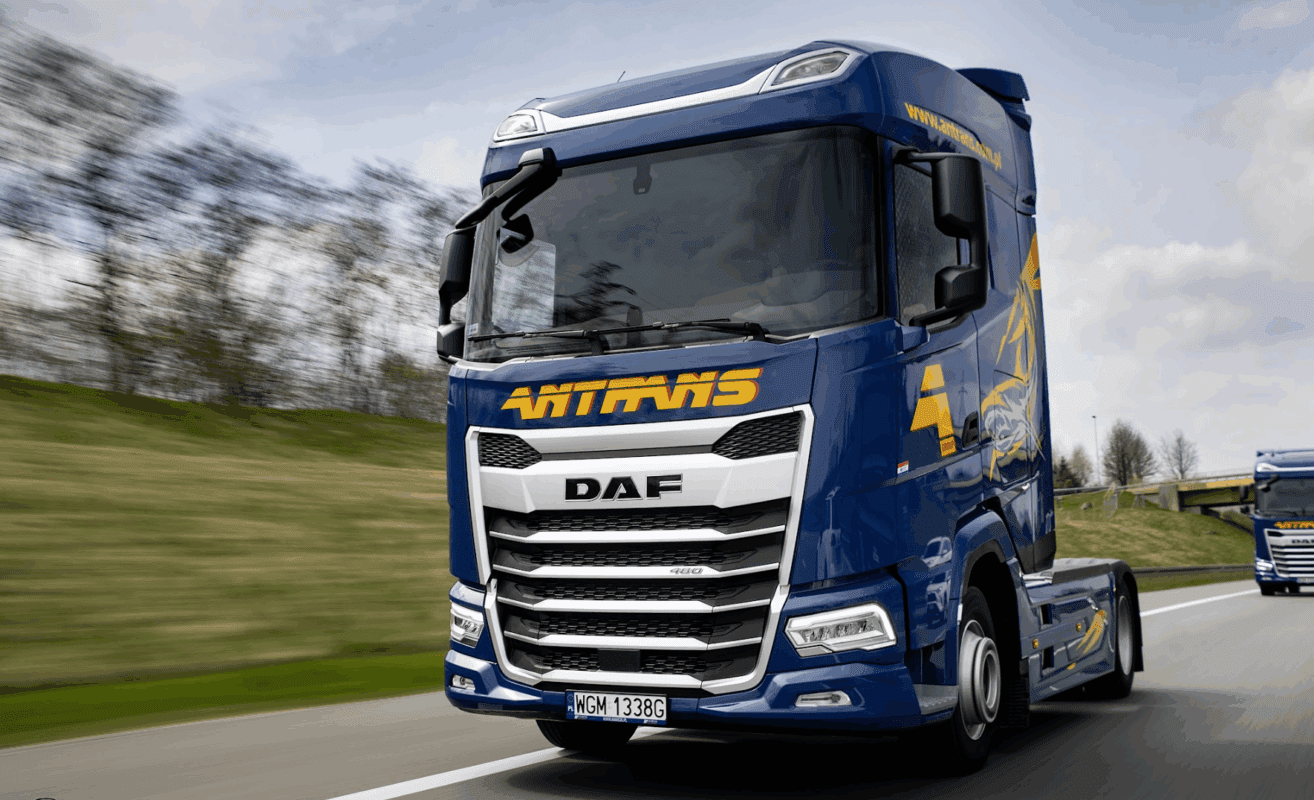
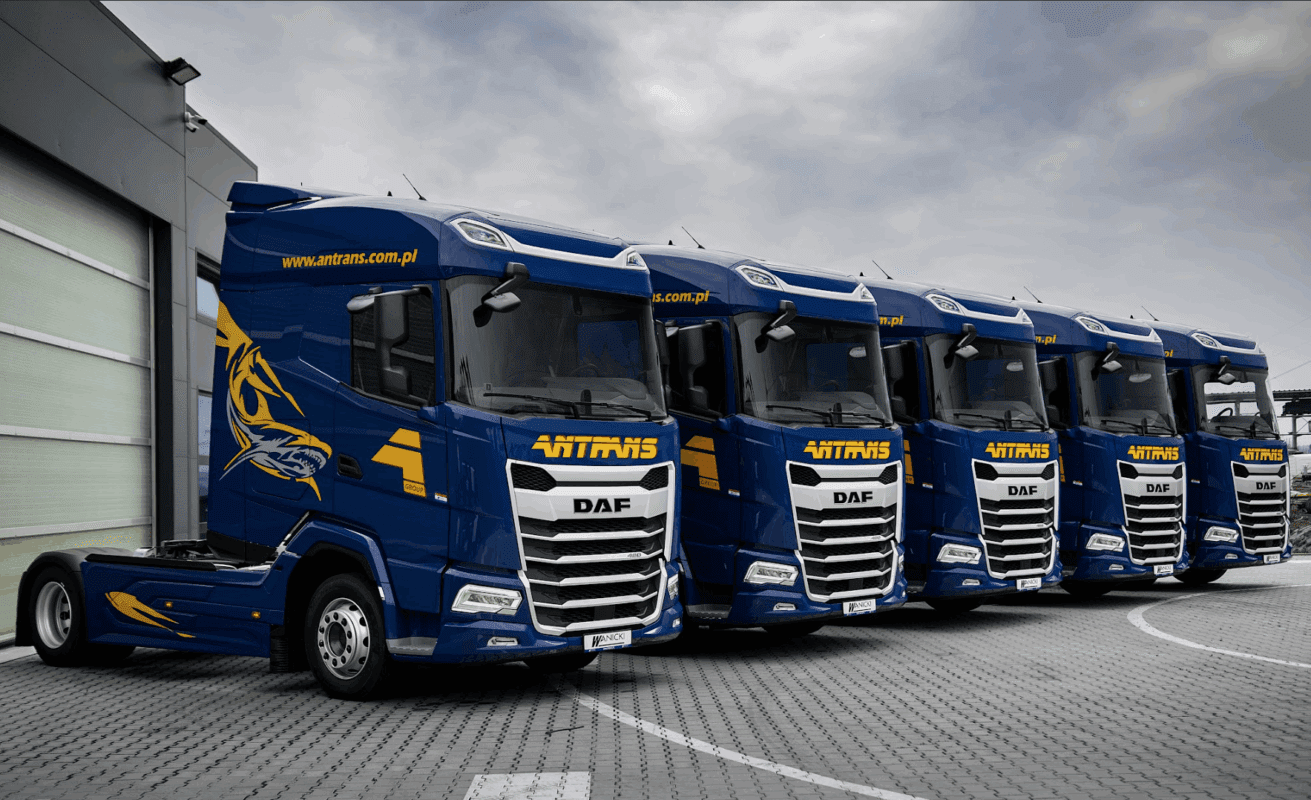
Antrans BiS Logistics and Freight Forwarding Fleet

Who is affected by the traffic restrictions in Slovakia?

Traffic bans and truck traffic bans in Slovakia apply to two categories of vehicles in accordance with Act No. 8/2009 Z. z., and therefore, in practice, they also include bans on truck traffic in Slovakia and typical transit traffic. The first category consists of trucks with a gross vehicle weight (GVW) exceeding 7.5 t (nákladné vozidlá s celkovou hmotnosťou nad 7.5 t), which is the EU standard covering heavy truck combinations, such as the MAN TGX, Scania R-series, Volvo FH, and Mercedes Actros. The second category consists of vehicle combinations with a gross weight exceeding 3.5 t (jazdné súpravy s celkovou hmotnosťou nad 3.5 t), i.e., tractor-trailers and vehicles with trailers, which in practice also includes medium-sized delivery vans with trailers, e.g., a Mercedes Sprinter 3.5 t + 2 t trailer, or an Iveco Daily 5 t + 1.5 t trailer. It is precisely these groups that are most frequently subject to the 2026 regulations, i.e., the 2026 truck bans in Slovakia.

Vehicles that are completely exempt include, among others, public service vehicles (police, fire department, emergency medical services, civil defense, armed forces, military police), road maintenance vehicles (road administration, winter maintenance, accident cleanup), media vehicles covering sporting and cultural events, public and tourist buses regardless of weight, and motorhomes and recreational vehicles used privately for non-commercial purposes. Agricultural transport (pol’nohospodárska doprava) performing agricultural work is exempt during harvest season and urgent seasonal work, which in practice constitutes an exception despite general traffic bans in Slovakia and possible restrictions on truck traffic on major routes in Slovakia.

Antrans BiS – Logistics and Freight Forwarding

220 cars

Own and partner fleets available throughout Europe. Euro 6 vehicles, COIL MULDA/STANDARD/MEGA trailers, GPS monitoring and forwarders available 24/7 – we will always find a place for your transport.

32 years

32 years of experience in transport Poland-Europe. One of the oldest TSL companies in the region – we serve hundreds of companies in automotive, furniture, electronics and FMCG.

260,000 km

We handle more than 21,000 orders annually on European routes. Every day, an average of 58 Antrans Bis trucks serve customers in 7 EU countries, covering a total of 2.6 million kilometers per year.

260,000 km

We handle more than 21,000 orders annually on European routes. Every day, an average of 58 Antrans Bis trucks serve customers in 7 EU countries, covering a total of 2.6 million kilometers per year.

What are the exceptions to the driving ban in Slovakia?

The list of exceptions to the traffic ban and the truck driving ban in Slovakia is broader than in Austria but narrower than in Poland; therefore, when planning a trip, it is worth checking whether a given shipment is exempt from the truck driving ban in Slovakia. Medical transport is completely exempt, meaning vehicles carrying medical equipment, medications, biological materials to medical facilities, medical oxygen, blood and blood products, and organs for transplantation. Humanitarian transport is also sometimes exempt in crisis situations, such as aid for victims of natural disasters, support for refugees, or deliveries to charitable organizations, which in practice allows such trips to proceed despite traffic bans in Slovakia.

The exemptions also cover urgent agricultural transport during the growing season, when delays could result in losses, including the transport of agricultural produce during harvests, the transport of livestock to slaughterhouses in veterinary emergencies, and the transport of feed in cases where a shortage threatens animal welfare. Exceptions may also apply to the support of mass events (sports and cultural), i.e., trips involving technical and logistical equipment as well as catering. This is particularly important when there are truck traffic bans in Slovakia or when trucks are prohibited from driving in Slovakia on Sundays, holidays, or during the summer vacation period.

The transport of perishable goods may also be exempt, but under a narrower definition than in Poland—namely, fresh milk and dairy products with a short shelf life, fresh meat and cold cuts without preservatives, fresh unfrozen fish, bread and pastries with a very short shelf life, and fresh seasonal fruits and vegetables. Frozen products, UHT, pasteurized, vacuum-packed, and canned products are not covered by the exemption, so they may still be subject to truck traffic bans in Slovakia in 2026, including holiday bans, weekend bans, and summer vacation bans. The driver should have documents confirming the nature of the cargo, e.g., A CMR form with production details and date, a certificate of freshness from the manufacturer, and veterinary documents for products of animal origin.

Sources:

Národná diaľničná spoločnosť (NDS) – the operator of highways and expressways in Slovakia
SLOV-LEX – Act No. 8/2009 Z. z. on Road Traffic (Road Traffic Act)
ČESMAD Slovakia – Association of Road Carriers of the Slovak Republic (Association of Road Carriers)

Restrictions on Truck Traffic in Slovakia
Traffic-Restrictions-2026-for-Trucks-in-Slovakia
Truck-Traffic-Bans-in-Slovakia-2026

Seasonal Events in Slovakia

In Slovakia, the greatest difficulties for trucks arise mainly during urban and seasonal events, regardless of whether a general traffic ban or truck traffic bans are in effect on a given day. During fairs, street races, stadium events, and periods of heavy tourist traffic, temporary street closures, detours, and local truck traffic restrictions—including bans on entering city centers—are common. In practice, even when there is no general truck ban in Slovakia, local traffic restrictions for trucks may be in place, and deliveries are sometimes permitted only during designated “time windows” or on a “staff access” basis.

Required Documentation for Dismissal

If you need to enter a restricted zone (e.g., as event staff or to make a delivery to a venue), have documents ready that clearly show the purpose of your trip and facilitate inspections in the event of traffic restrictions in Slovakia. At a minimum, you’ll need a CMR or a waybill with the address, a delivery notice, contact information for the recipient or organizer, and—if required locally—confirmation of entry or authorization (email, letter, ID). For refrigerated trucks or sensitive goods, it’s also a good idea to have temperature specifications and thermograph readings, as these help demonstrate the legitimacy of the trip despite local restrictions.

Antrans BiS Logistics Fleet
read more

How can you plan routes through Slovakia while avoiding fines?

When planning trips through Slovakia, you need to take into account two sets of restrictions, because traffic bans and truck traffic bans in Slovakia in 2026 apply both on Sundays and holidays (15 days a year, 00:00–22:00) and on summer Saturdays (9 Saturdays, 07:00–19:00). The most favorable time windows are weekdays (Monday–Friday) with no restrictions, Saturdays outside of July and August with no restrictions, summer Saturdays from 19:00–24:00 (5-hour window), and Sundays and holidays from 22:00 to 24:00 (2-hour window). In practice, these are the time windows that allow you to avoid traffic restrictions in Slovakia, including holiday truck bans, seasonal weekend bans, and summer vacation truck bans. It is crucial to use the 2-hour Sunday window from 10:00 p.m.–12:00 a.m. to leave Slovakia for Poland, the Czech Republic, or Hungary, because the bans there also end at 10:00 p.m., allowing you to continue driving without interruption and minimize the risk of having to stop.

For carriers from Poland, the most important routes are the D1 Žilina-Trnava-Bratislava (connection to the Czech Republic and Austria), D1 Trnava–Trenčín–Žilina–Poprad–Košice–Michalovce (east-west transit route between the Czech Republic and Ukraine, 430 km, 4–5 hours), D1/R1 Žilina–Ružomberok–Liptovský Mikuláš–Poprad (the shortest route from Poland to Hungary via Slovakia, 250 km, 3 hours). During the summer season, Saturdays on the D1 in the Tatra Mountains region (Ružomberok–Poprad) are the busiest—here, the 7:00 a.m.–7:00 p.m. ban is most strictly enforced by mobile police patrols.

An alternative during the summer Saturday ban is to use local Class II and III roads, where the truck ban does not apply. For example, instead of the D1 Ružomberok–Poprad (Saturday ban), you can take Route 18 via Liptovský Mikuláš–Važec–Štrba (open on Saturdays, +35 km, +50 minutes), and instead of the D1/R1 Žilina–Martin, you can take Route 64 via Turčianske Teplice (+20 km, +30 minutes). However, keep in mind that local roads are narrower (6–7 m wide), winding (turn radius 15–25 m), and have speed limits of 50–70 km/h in built-up areas, so this option is mainly worthwhile for short distances— <, or 100 km—or when the 2026 truck bans coincide with a summer Saturday and risk causing a long delay.

The Slovak electronic toll system (elektronické mýto) applies to trucks >weighing 3.5 metric tons on highways, expressways, and Class I roads. Rates in 2026: Euro VI 0.182 EUR/km, Euro V 0.238 EUR/km, Euro IV and older 0.294 EUR/km. For example, the route from Žilina to Košice (330 km) costs: Euro VI: 60 EUR, Euro V: 79 EUR, Euro IV: 97 EUR. An OBU (on-board unit) is mandatory; it is available from the SkyToll operator, installation is free, and a refundable deposit of 50 EUR is required. Without an OBU, the fine is 5,000 EUR plus the toll charges for the last 30 days of driving in Slovakia.

Sources:
Ministry of the Interior of the Slovak Republic – Traffic Regulations
Office for the Regulation of Electronic Communications and Postal Services

Transportation and Logistics

Cooperation with carriers

Antrans Bis from Olkusz invites carriers for long-term cooperation on international routes. For 28 years, we have specialized in full-truckload transport between Poland and Italy, as well as on European and domestic routes.

  • Fixed routes and regular orders on Poland-Italy and European lines
  • Timely payments, short settlement periods without delays
  • High monthly mileage, high earnings for experienced drivers
  • 24/7 support, availability of forwarders around the clock

We are currently looking for partners throughout Poland who have tractor-trailer combinations with curtain-sided semi-trailers.

Start cooperation

FAQ: Truck Traffic Restrictions in Slovakia – Questions and Answers

Who is affected by the truck traffic bans in Slovakia?

Traffic bans and truck traffic bans in Slovakia mainly apply to vehicles weighing more than 7.5 metric tons and combinations weighing more than 3.5 metric tons (tractor + semi-trailer or trailer), which, in practice, also covers the typical truck traffic bans in Slovakia. In practice, this covers most international transport, particularly standard 40-metric-ton truck-trailer combinations, which are most often subject to the 2026 truck ban regulations in Slovakia. It’s worth remembering that the 3.5-metric-ton limit for truck-trailer combinations may also apply to “smaller” vehicles if they’re towing a trailer. The most common mistakes stem from confusing the gross vehicle weight rating (GVWR) of the solo vehicle with the GVWR of the entire combination. If you have any doubts, check the GVW in the registration certificate for both the vehicle itself and the configuration with a trailer or semi-trailer.

Traffic bans and truck bans in Slovakia mainly apply to highways, expressways, and Class I national roads, which is important to consider when planning routes around truck bans in Slovakia and the 2026 truck bans in Slovakia. This is a key difference in planning, because some lower-class local roads may not be subject to the restrictions listed in the calendar. At the same time, this does not mean complete freedom, as local restrictions on truck traffic in Slovakia may apply in the form of weight limit signs, truck entry bans, or axle load limits, which in practice also result in traffic bans for heavy trucks in Slovakia. Detours via lower-class roads tend to be slower and less comfortable for truck-trailer combinations, as the roads are narrow, winding, and often pass through towns. Therefore, treat them as a contingency plan rather than a standard alternative.

Yes, transit is prohibited if you are traveling on the roads specified in the restrictions. There is no “transit exception” simply because you’re driving through the country on your way to another destination. In practice, this means that on Sundays and holidays, the main transit corridors are closed to heavy traffic. If you’re planning a trip from Poland to Hungary or from the Czech Republic to Ukraine through Slovakia, you’ll need to time your journey to avoid the restrictions. It’s a good idea to plan your stops before reaching the border so you don’t end up stuck on the Slovak section of the highway.

It’s risky because once the ban goes into effect, you could be detained until it ends. In practice, the “last few kilometers” often end in stress: traffic jams, checkpoints, or no parking spaces. If you enter a road subject to a driving ban and the clock strikes 12:00 a.m. (or 7:00 a.m. on Saturdays in the summer), you may not be legally allowed to continue driving. It’s safer to pull into a parking lot earlier and set off only after the restriction has ended. This is especially important in the summer, when passenger traffic increases and it’s harder to drive smoothly.

Yes, local signs may impose restrictions regardless of the schedule of restrictions. Most often, these involve limits on gross vehicle weight, axle load, or bans on trucks entering urban areas. It’s simple: even if it’s “scheduled” to be allowed, a sign along the route may force you to take a detour. In practice, this applies to bridges, city centers, and roads with limited load-bearing capacity. That’s why it’s worth having a truck navigation system and not ignoring signs that say “except…” or “dopravná obsluha…,” as these often determine whether entry is legal.

Exceptions typically apply to, among other things, emergency services, rescue situations, and certain types of transport for justified reasons. In practice, the key factor is whether you can demonstrate “why you’re driving” and whether the transport actually falls under one of the exceptions. The driver’s statements alone are usually not enough—what counts are the documents and whether the actual situation matches the paperwork. For special shipments (e.g., refrigerated trucks, sensitive goods, events, emergencies), it’s a good idea to have confirmation from the shipper or recipient. If you do not qualify for an exception, plan your trip exclusively during time windows after the ban has ended.

It is safest to have the CMR and documents confirming the purpose of the trip (order/notification, waybill, specification). The documents should clearly state the loading and unloading addresses and provide as precise a description of the goods as possible. The more “general” the entry in the CMR (e.g., “goods”), the harder it is to prove the legitimacy of the trip. It’s also a good idea to have the phone number of the recipient or warehouse—sometimes a quick verification can resolve the situation. A lack of paperwork doesn’t always result in a fine, but it often leads to a mandatory stop.

The most common problem is a description of the cargo that is too general, making it difficult to assess whether you’re driving legally.
Inspectors check whether the shipment has characteristics that might qualify for an exception (e.g., sensitive goods, urgent deliveries, specific handling requirements). If the CMR form lists a “mix” without specifics, it’s difficult to justify. It’s a good idea to include the name of the goods, quantities, weight, and, if applicable, the terms of transport. A packing list or specification is also helpful—especially when there are a large number of items.

If you violate the ban, you may be fined and ordered to pull over. In practice, it’s often not the fine itself that’s the most painful, but the loss of time, the missed delivery window, and the delayed delivery. In the case of more serious violations or repeat offenses, the consequences may also affect the company, not just the driver. That’s why planning “right down to the wire” is usually more expensive than making one extra stop at a parking lot. It’s safest to treat prohibitions as strict constraints in the schedule, rather than “something that might work out.”

carrier-zone
Opinie klientów przepisy