Truck Traffic Restrictions in Germany 2026.
Regulations, calendar, guide.

When planning a trip through Germany, it is important to be aware of the truck traffic restrictions in Germany that apply at the federal level. The legal basis is § 30 of the Straßenverkehrsordnung (StVO), supplemented by the Ferienreiseverordnung for the vacation period.

This guide contains a complete calendar of truck traffic bans in Germany for 2026, detailed information on the hours during which truck traffic bans are in effect, regional holidays in the federal states, and practical tips for planning routes through Germany. This will make it easier for you to plan your trip and avoid situations where truck traffic bans in Germany block your transit at a critical moment. Ignorance of the regulations can result in fines of up to 570 euros and the impoundment of your vehicle, so always check the current schedule before departure and adjust your route and travel times to comply with the applicable restrictions.

Arrange for cargo transport Orders for Carriers
Truck traffic bans

Zakazy ruchu ciężarówek w Niemczech 2026

Na tle innych krajów europejskich, takich jak Polska, Francja, Austria czy Szwajcaria, Niemcy wyróżniają się tym, że mają ogólnokrajowy zakaz jazdy dla ciężarówek w niedziele i wybrane święta oraz dodatkowe ograniczenia wakacyjne na części tras, dlatego przy tranzycie przez Niemcy kluczowe jest dopasowanie trasy i godzin przejazdu do kalendarza zakazów, a nie tylko do samego dnia tygodnia.

Niemieckie zakazy ruchu ciężarówek działają nieprzerwanie od 1956 roku i opierają się na dwóch głównych filarach prawnych. Po pierwsze, § 30 Absatz 3 Straßenverkehrsordnung (StVO) reguluje zakaz niedzielno-świąteczny (Sonn- und Feiertagsfahrverbot) obowiązujący przez cały rok. Po drugie, Ferienreiseverordnung wprowadza dodatkowe zakazy sobotnie w okresie wakacyjnym lipiec-sierpień, aby odciążyć autostrady podczas masowych wyjazdów urlopowych Niemców.

Niemiecki zakazy ruchu ciężarówek wyróżniają się jednolitością i prostotą. Niemcy stosują zakazy ruchu ciężarówek, które są federalne i obowiązujące jednolicie na całym terytorium. Jedyne różnice dotyczą świąt regionalnych specyficznych dla poszczególnych landów (Bundesländer), co wynika z federalnej struktury państwa i różnic kulturowo-religijnych między landami.

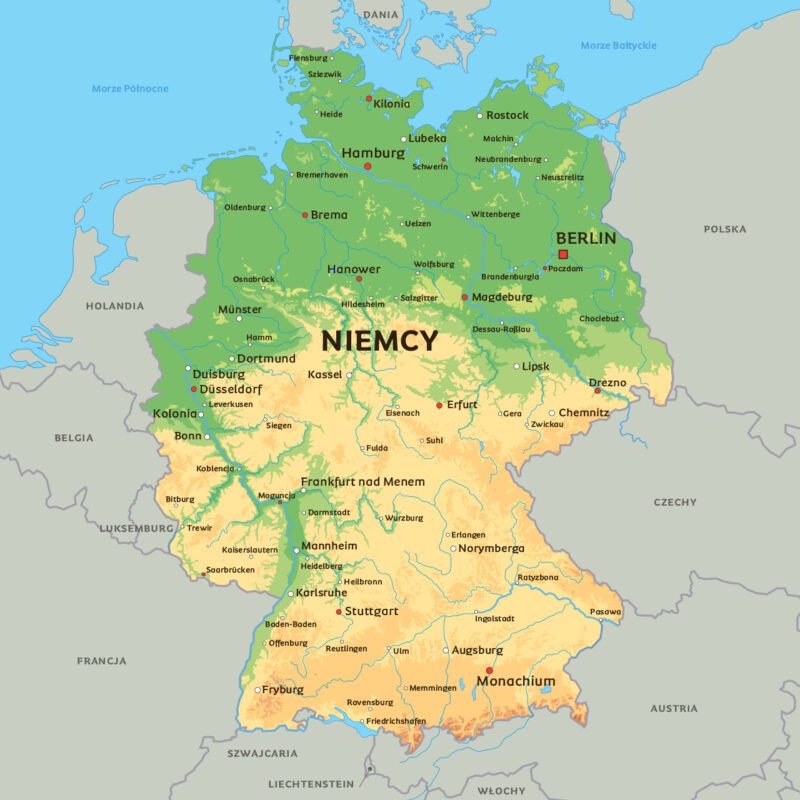
Zakaz podstawowy obowiązuje w niedziele i święta od 00:00 do 22:00 na całej sieci drogowej Niemiec, obejmując autostrady (Autobahnen), drogi krajowe (Bundesstraßen) oraz drogi lokalne. Dodatkowo w okresie 1 lipca – 31 sierpnia wszystkie soboty podlegają zakazowi od 07:00 do 20:00, ale tylko na określonych odcinkach autostrad i dróg krajowych wymienionych w § 1 Absatz 2 Ferienreiseverordnung. To rozwiązanie ma na celu separowanie ruchu ciężarowego od intensywnego ruchu wakacyjnego bez całkowitego sparaliżowania transportu w dni robocze.

Podstawa prawna i cel ograniczeń

Zakazy ruchu ciężarówek w Niemczech wynikają przede wszystkim z § 30 ust. 3-4 Straßenverkehrsordnung (StVO). Przepis ten wprowadza zakaz jazdy w niedziele i święta w godzinach 00:00-22:00 dla pojazdów o DMC powyżej 7,5 t oraz ciężarówek z przyczepami, gdy chodzi o przewóz zarobkowy towarów, również wtedy, gdy przejazd jest „na pusto”, ale pozostaje związany z transportem.

Dodatkowe ograniczenia w sezonie urlopowym wprowadza Ferienreiseverordnung. Od 1 lipca do 31 sierpnia w soboty obowiązuje zakaz w godzinach 07:00-20:00 na wskazanych odcinkach autostrad i dróg federalnych, które są wymienione w rozporządzeniu. Celem zakazów jest ograniczenie korków w weekendy i podczas wyjazdów wakacyjnych, poprawa bezpieczeństwa oraz zmniejszenie hałasu i emisji, a zakaz niedzielno-świąteczny wpisuje się też w niemiecką zasadę Sonntagsruhe. System przewiduje wyjątki ujęte w StVO i Ferienreiseverordnung, m.in. dla dostaw towarów wrażliwych czasowo, żywych zwierząt i wybranych przewozów intermodalnych, a przestrzeganie zakazów jest kontrolowane przez właściwe służby, w tym BALM i policję.

Harmonogram zakazów ruchu ciężarówek w 2026 roku w Niemczech

DATADZIEŃ TYGODNIAŚWIĘTO FEDERALNEZAKAZ RUCHU
1 styczniaCzwartekNeujahr (Nowy Rok)00:00 – 22:00
3 kwietniaPiątekKarfreitag (Wielki Piątek)00:00 – 22:00
6 kwietniaPoniedziałekOstermontag (Poniedziałek Wielkanocny)00:00 – 22:00
1 majaPiątekTag der Arbeit (Święto Pracy)00:00 – 22:00
14 majaCzwartekChristi Himmelfahrt (Wniebowstąpienie)00:00 – 22:00
25 majaPoniedziałekPfingstmontag (Poniedziałek Zielonych Świąt)00:00 – 22:00
3 październikaSobotaTag der Deutschen Einheit (Dzień Jedności Niemiec)00:00 – 22:00
25 grudniaPiątek1. Weihnachtsfeiertag (Boże Narodzenie)00:00 – 22:00
26 grudniaSobota2. Weihnachtsfeiertag (Drugi Dzień Świąt)00:00 – 22:00
WSZYSTKIE NIEDZIELE W ROKU
Każda niedzielaNiedzielaSonntagsfahrverbot (zakaz niedzielny)00:00 – 22:00

Tabela regionalnych świąt w landach (Bundesländer) 2026

DATADZIEŃ TYGODNIAŚWIĘTO REGIONALNELANDY Z ZAKAZEM
6 styczniaWtorekHeilige Drei Könige (Trzech Króli)BW, BY, ST
4 czerwcaCzwartekFronleichnam (Boże Ciało)BW, BY, HE, NW, RP, SL (+ częściowo SN, TH)
15 sierpniaSobotaMariä Himmelfahrt (Wniebowzięcie NMP)Cała Saara (SL) + gminy katolickie w Bawarii (BY)
31 październikaSobotaReformationstag (Dzień Reformacji)BB, HB, HH, MV, NI, SN, ST, SH, TH
1 listopadaNiedzielaAllerheiligen (Wszystkich Świętych)BW, BY, NW, RP, SL

Skróty landów: BW=Baden-Württemberg, BY=Bayern (Bawaria), BB=Brandenburg, HB=Bremen, HH=Hamburg, HE=Hessen, MV=Mecklenburg-Vorpommern, NI=Niedersachsen, NW=Nordrhein-Westfalen, RP=Rheinland-Pfalz, SL=Saarland, SN=Sachsen, ST=Sachsen-Anhalt, SH=Schleswig-Holstein, TH=Thüringen

Tabela sobót wakacyjnych 2026

DATADZIEŃ TYGODNIAZAKAZ WAKACYJNYTRASY OBJĘTE
4 lipcaSobota07:00 – 20:00Wybrane autostrady i drogi krajowe (§1 Abs. 2 Ferienreiseverordnung)
11 lipcaSobota07:00 – 20:00Wybrane autostrady i drogi krajowe
18 lipcaSobota07:00 – 20:00Wybrane autostrady i drogi krajowe
25 lipcaSobota07:00 – 20:00Wybrane autostrady i drogi krajowe
1 sierpniaSobota07:00 – 20:00Wybrane autostrady i drogi krajowe
8 sierpniaSobota07:00 – 20:00Wybrane autostrady i drogi krajowe
15 sierpniaSobota07:00 – 20:00Wybrane autostrady i drogi krajowe (patrz uwaga poniżej)
22 sierpniaSobota07:00 – 20:00Wybrane autostrady i drogi krajowe
29 sierpniaSobota07:00 – 20:00Wybrane autostrady i drogi krajowe

WAŻNE: Zakaz wakacyjny sobotni obowiązuje tylko na określonych odcinkach autostrad i dróg krajowych wymienionych w § 1 Absatz 2 Ferienreiseverordnung. Nie obejmuje całej sieci drogowej, w przeciwieństwie do zakazów niedzielno-świątecznych.

Uwaga dotycząca 15 sierpnia (Mariä Himmelfahrt): W całej Saarze oraz w katolickich gminach Bawarii 15 sierpnia jest świętem ustawowym, dlatego obowiązuje tam pełny zakaz świąteczny w godzinach 00:00 – 22:00 na całej sieci drogowej, a nie tylko zakaz wakacyjny 07:00 – 20:00 na wybranych trasach. W pozostałych landach 15 sierpnia obowiązuje wyłącznie zakaz wakacyjny sobotni na wskazanych odcinkach.

Główne trasy objęte zakazem wakacyjnym sobotnim:

  • A1 (Hamburg – Bremen – Dortmund – Köln)
  • A3 (Köln – Frankfurt – Nürnberg – München)
  • A5 (Frankfurt – Karlsruhe – Freiburg – Basel)
  • A7 (Hamburg – Hannover – Kassel – Würzburg – Füssen)
  • A8 (München – Stuttgart – Karlsruhe)
  • A9 (Berlin – Leipzig – Nürnberg – München)
  • Większość odcinków prowadzących nad Morze Północne, Bałtyk oraz do Alp Bawarskich

Kogo dotyczą zakazy ruchu ciężarówek w Niemczech

Zakaz ruchu ciężarówek w Niemczech dotyczy pojazdów o dopuszczalnej masie całkowitej (zulässiges Gesamtgewicht – zGG) powyżej 7,5 tony oraz ciężarówek z przyczepą niezależnie od masy całkowitej zestawu. To oznacza, że nawet jeśli ciężarówka sama waży poniżej 7,5 tony, ale ciągnie przyczepę, podlega zakazowi. Ograniczenia dotyczą wyłącznie ruchu zawodowego lub odpłatnego przewozu towarów (geschäftsmäßige oder entgeltliche Beförderung von Gütern) wraz z pustymi przejazdami związanymi z tym transportem (damit verbundene Leerfahrten).

Pojazdy całkowicie zwolnione z zakazu

Zakazy ruchu ciężarówek nie dotyczą pojazdów służb publicznych i ratunkowych: Polizei (policja), Bundespolizei (policja federalna), Feuerwehr (straż pożarna), Bundeswehr (siły zbrojne), NATO-Truppen (wojska NATO), Katastrophenschutz (ochrona przed katastrofami), Straßenverwaltung und Straßendienste (administracja i służby drogowe).

Prohibitions under the regulation versus restrictions indicated by signs

In Germany, restrictions on trucks result not only from general traffic bans but also from local signs on specific road sections. Even if regulations say “you can drive,” a sign at the entrance to a city, on a bridge, or on a road with a weight limit can completely block your route or force you to take a detour.

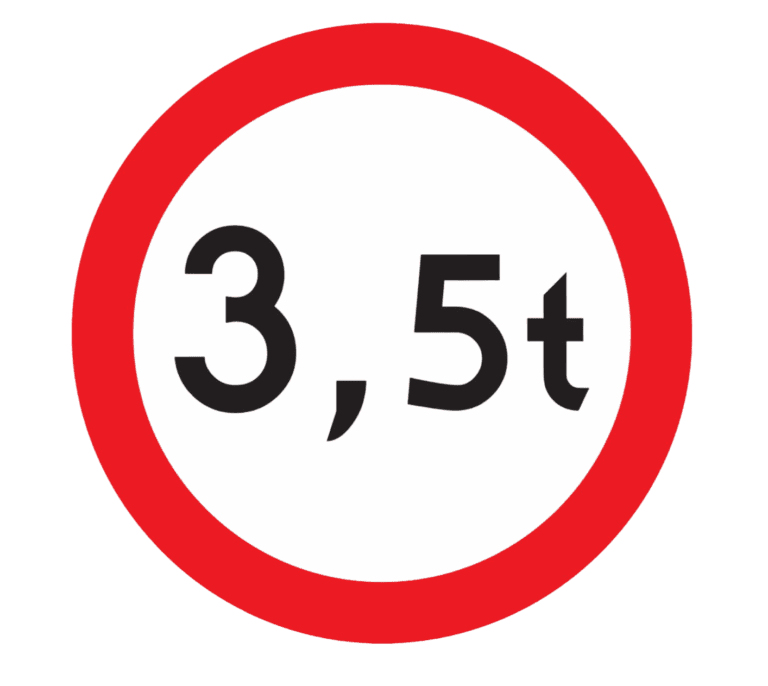
Weight Limit

Vehicles with an actual gross weight exceeding the value shown on the sign are prohibited from entering (the actual weight is what counts here, not just the gross vehicle weight rating).

B-18

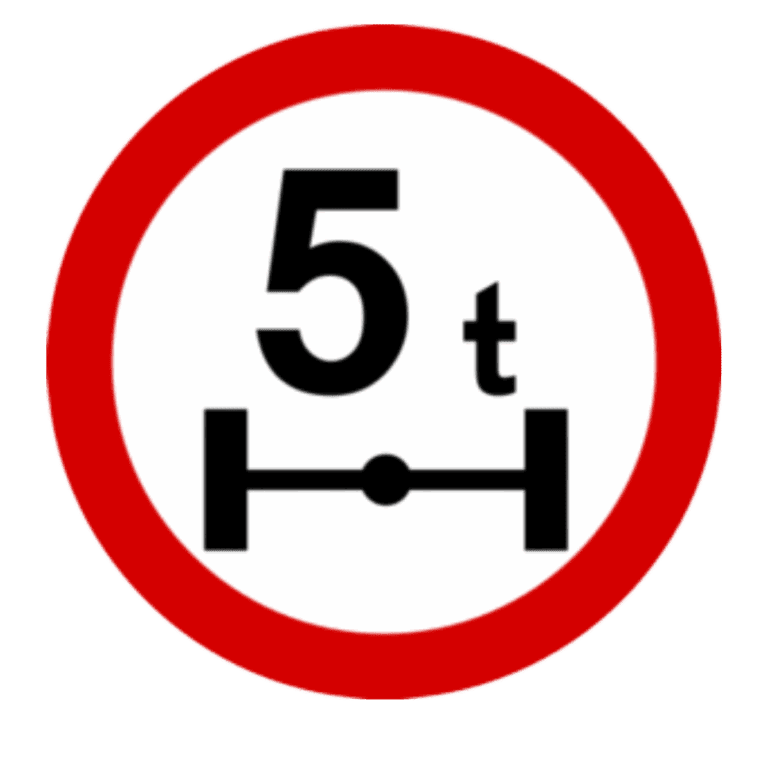
Axle Load Limit

No entry for vehicles with an axle load greater than the value indicated on the sign (common on bridges and sections with limited load-bearing capacity).

B-19

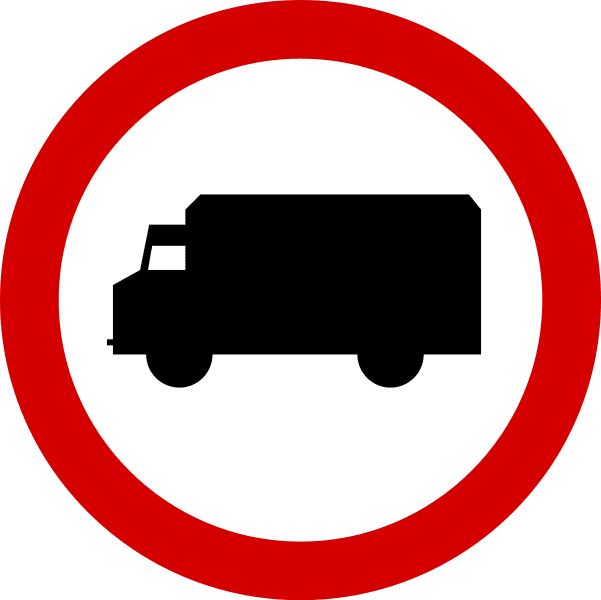
Truck Ban

No entry for trucks (by definition, this includes trucks with a gross vehicle weight rating (GVWR) of more than 3.5 metric tons; the weight is often specified on the sign).

Truck Traffic Ban

Penalties for Violating Traffic Restrictions in Germany

Violations of truck traffic restrictions in Germany result in administrative fines governed by the 2026 Bußgeldkatalog. The German system provides for separate penalties for the driver and the vehicle owner (business operator), and both penalties may be imposed simultaneously for the same violation. Unlike most other traffic violations, violating the Sunday and holiday driving ban does not result in points on the central driver’s record in Flensburg (Fahreignungsregister); however, this does not change the fact that the financial penalties are severe.

The basic fine for a driver (Fahrer) operating a vehicle during a ban is 120 euros, in accordance with item 141.3 of the Bußgeldkatalog. The fine for the vehicle owner (Halter) who ordered or expressly permitted driving despite the ban in effect is 570 euros, in accordance with Section 141.4 of the Bußgeldkatalog. If a transportation company knowingly instructed the driver to violate the ban (e.g., by imposing time pressure or threatening termination), both the driver and the company are jointly liable—resulting in a maximum penalty of 690 euros per violation.

TYPE OF VIOLATIONENTITYAMOUNT OF THE FINEFLENSBURG POINTS
Driving During the Sunday and Holiday Driving BanDriver (Fahrer)120 EUR0
Request to Drive During the Sunday and Holiday Driving BanOwner (Halter)570 EUR0
Driving on a Saturday During the Summer Driving BanDriver (Fahrer)120 EUR0
Ride Request During the Saturday Summer BanOwner (Halter)570 EUR0
Lack of shipping documents (ATP, CMR)Driveras for a standard violation0
Total maximum penalty (driver + owner)Both parties690 EUR0

In addition to financial penalties , the Polizei, Bundespolizei, or Autobahnpolizei has the authority to issue an order prohibiting further travel (Weiterfahrtsuntersagung) in accordance with § 36 Absatz 5 StVO. This means that the truck must remain parked on the shoulder, at a highway rest area (Autohof, Rasthof), or in another safe location until 10:00 p.m., that is, until the Sunday and holiday driving ban ends. In the case of a Saturday holiday driving ban, the vehicle must remain there until 8:00 p.m. The driver may not continue driving even after paying the fine on the spot—the decision to impound the vehicle is independent of whether the fine is paid.

Vehicle impoundment (Fahrzeugsicherstellung) results in significant additional financial and operational losses. First, delivery delays can result in contractual penalties from the recipient, which in just-in-time transportation for the automotive or electronics industries often amount to hundreds of euros for every hour of delay. Second, parking costs —most highway parking lots in Germany are paid (10–25 EUR per day), and if a vehicle must wait from 8:00 a.m. to 10:00 p.m., this generates additional expenses. Third, the driver’s wages for the time spent waiting involuntarily must be paid in accordance with German labor law (Arbeitszeitgesetz), which increases operating costs.

Inspection Frequency and Enforcement Methods

German traffic authorities conduct particularly intensive checks to ensure compliance with driving bans on Sundays, holidays, and Saturdays during school vacations. The Bundespolizei uses both stationary checkpoints on major highways (Kontrollstellen) and mobile patrols, as well as automatic number plate recognition (ANPR) systems. On Saturdays during the summer vacation period, on the A1, A3, A5, A7, A8, and A9—leading to seaside and Alpine resorts—inspections are particularly frequent, with police helicopters used to detect trucks traveling on highways subject to the ban.

In 2024, the Bundespolizei and state traffic police conducted a total of more than 45,000 inspections to enforce Sunday and holiday driving bans, of which approximately 3.2% resulted in a fine. The most common violations involved driving without the proper exemption documentation (e.g., lack of a CMR form confirming the transport of fresh produce) and exceeding the 200-kilometer radius for intermodal transport to rail terminals. The statistics also show that on Saturdays during the summer vacation period, the detection rate for violations is higher due to the lower number of authorized vehicles on the roads, which makes it easier to identify trucks violating the ban.

ADDITIONAL CONSEQUENCES OF A VIOLATIONDETAILS
Prohibition on Continuing the Journey (Vehicle Detention)The vehicle must remain parked until 10:00 p.m. (Sundays and holidays) or 8:00 p.m. (Saturdays during summer vacation)
Entry in the violation registryViolation recorded in the BALM system and by the Kraftfahrt-Bundesamt (KBA)
Parking FeesParking at Autohof/Rasthof: 10–25 EUR per night
Contractual penalties from customersJust-in-time transport: 100–500 EUR per hour of delay
Driver’s Pay for DowntimeMandatory under the Arbeitszeitgesetz
Possible Insurance IssuesRepeated violations may affect your liability and comprehensive insurance premiums

Sources: Federal Office for Logistics and Mobility (BALM), Road Traffic Regulations (StVO) § 30, 2026 Schedule of Fines

The Most Common Mistakes and Pitfalls During Traffic Stops in Germany

1

No documents confirming the exemption

Without a CMR or documents from the shipper/consignee, the exception will usually not be approved. Have the CMR, order, or shipping notice, as well as the delivery note or packing list, on hand so you can immediately show the purpose of the trip and the destination.

2

Inaccurate description of the cargo in the CMR

General descriptions make it difficult to determine whether the shipment meets the conditions for the exception. The CMR should include the name of the goods, the quantity, and the weight; a specification or packing list is also helpful.

3

Temperature-controlled transport with no data

When transporting sensitive cargo, the conditions of transport—especially temperature—are crucial. It’s a good idea to have a specification sheet with temperature requirements, as well as a printout or log from a thermograph, if one is used.

4

ADR without a complete set of documents

For ADR shipments, exemption may depend on the completeness of the documentation and the compliance of the labeling. Typically, an ADR waybill, written instructions, a valid ADR driver’s certification, and the required equipment are required.

5

Driving through a restricted section without meeting the “minimum travel distance” requirement

In Germany, when it comes to local restrictions and signs such as “Lkw-Verbot,” “Durchfahrt verboten,” or “Anlieger frei,” what matters is access to a specific destination, not transit through the area. If you’re driving under an exemption, show the loading or unloading address and choose the shortest reasonable route to your destination.

6

An “empty” trip without an operational justification

An empty vehicle should also have a documented purpose for the trip. After unloading, it is helpful to have a signed unloading confirmation or CMR, and when picking up a load, a waybill, notice of arrival, or confirmation of ramp reservation.

Truck traffic bans
Antrans BiS Logistics and Freight Forwarding Fleet

What are the exceptions to the truck driving ban in Germany?

The German system provides for a precisely defined list of exceptions set forth in § 30, paragraph 3, items 1–4 of the StVO and § 2 of the Ferienreiseverordnung. These exceptions are designed, on the one hand, to ensure the continuity of supplies of essential goods and the operation of intermodal transport, and, on the other hand, not to undermine the overall purpose of the bans, which is to reduce traffic congestion and improve safety.

Intermodal rail-road transport

Pursuant to § 30, paragraph 3, item 1 of the StVO and § 2, item 1 of the Ferienreiseverordnung, combined rail-road transport is fully exempt in the following cases. First, transport from the shipper (Versender) to the nearest suitable rail loading terminal (nächstgelegener geeigneter Verladebahnhof) within a radius of up to 200 kilometers. Second, transport from the nearest suitable rail unloading terminal (nächstgelegener geeigneter Entladebahnhof) to the consignee (Empfänger) within a radius of up to 200 km. Third, the transport between rail terminals as part of intermodal container and semi-trailer transport.

The key concept is the “nearest suitable terminal” (nächstgelegener geeigneter Bahnhof). You cannot choose just any terminal within a 200-km radius; the terminal must actually be the nearest one and technically suitable for loading the specific type of cargo. For example, if you are transporting 40-foot containers and the nearest terminal within a 150-km radius only handles 20-foot containers, you may go to a more distant terminal with the appropriate equipment, provided that it is the nearest terminal with such infrastructure.

Intermodal Transport: Seaports and Inland Ports

Pursuant to § 30, paragraph 3, item 1 of the StVO and § 2, item 1 of the Ferienreiseverordnung, transportation to and from seaports (Seehäfen) and inland ports (Binnenhäfen) within a radius of up to 150 kilometers from the port. This applies to the major seaports: Hamburg (Germany’s largest container port), Bremerhaven, Wilhelmshaven, Rostock, Lübeck, and key inland ports on the Rhine (Duisburg—Europe’s largest inland port, Cologne, Mannheim, Karlsruhe), the Oder (Szczecin/Świnoujście for shipments to Poland), and canals (Mittelland Canal, Main-Danube Canal).

The exemption covers both transport from the shipper’s warehouse to the port for loading onto the vessel and transport from the port, after unloading from the vessel, to the consignee’s warehouse. The required documentation includes the bill of lading (Bill of Lading – B/L) or a booking confirmation verifying the reservation of space on the vessel, along with proof of the distance from the loading/unloading location to the port (e.g., a printout from a GPS navigation system, a copy of a map with the route and mileage marked).

Fresh food (frische Lebensmittel)

In accordance with § 30, paragraph 3, item 2 of the StVO and § 2, item 2 of the Ferienreiseverordnung, the transport of fresh food products (frische Lebensmittel) is completely exempt. The list includes: fresh milk and dairy products (frische Milch, frischer Joghurt, frischer Quark, frische Butter, frischer Käse—fresh, unaged cheese), fresh meat and cold cuts (frisches Fleisch, fresh sausage products—unsalted sausages and cold cuts), fresh fish (fresh fish—unsmoked, unfrozen, and unsalted), and perishable fruits and vegetables (perishable fruits and vegetables).

The key terms are “frisch ” (fresh) and ” leichtverderblich ” (perishable). Frozen foods (gefrorene Lebensmittel), canned foods (konservierte Lebensmittel), vacuum-packed foods with a long shelf life, dried foods (getrocknete Lebensmittel), or foods preserved in other ways to prevent spoilage do not qualify for the exemption. In practice, this means that frozen French fries, frozen pizza, frozen vegetables, frozen meat, vacuum-packed aged cheese, and UHT milk— none of these products are covered by the exemption and may not be transported on Sundays and holidays.

Fruits and vegetables are particularly controversial. The exemption applies only to perishable products, such as strawberries, raspberries, lettuce, asparagus, and ripe tomatoes. On the other hand, potatoes, onions, carrots, and cabbage—as products with a longer shelf life—do not formally qualify for the exemption, although in practice, inspectors often consider them exempt when transported directly from farms to points of sale.

Live animals and fish (lebende Tiere und Fische)

In accordance with § 30, paragraph 3, item 2 of the StVO and § 2, item 2 of the Ferienreiseverordnung, the transport of live animals (lebende Tiere) and live fish (lebende Fische) is completely exempt. The exemption covers all types of live animal transport: cattle (Rinder) to slaughterhouses or between farms, pigs (Schweine) to slaughterhouses or breeding facilities, sheep and goats (Schafe und Ziegen), horses (Pferde)—including transport for sporting events—poultry (Geflügel)—chickens, turkeys, ducks, and geese—to farms or slaughterhouses, and other farm animals.

The exemption also applies to live fish transported in tanks with oxygenated water (Fischtransporte in Wassertanks mit Sauerstoffversorgung) to fish farms (Fischzuchtanlagen), the sale of live fish in restaurants and fish markets, and the transport of juvenile fish (Jungfische) for stocking ponds and lakes. Transport must be carried out in accordance with the Tierschutztransportverordnung (Regulation on the Protection of Animals During Transport), which specifies maximum transport times, temperatures, and requirements for watering and feeding the animals.

ADAC Roadside Assistance and Emergency Services Vehicles

A specific German exemption applies to roadside assistance vehicles (Pannenhilfefahrzeuge), in particular the fleet of the ADAC (Allgemeiner Deutscher Automobil-Club), Europe’s largest roadside assistance organization. ADAC vehicles may operate on Sundays and holidays to assist drivers, tow vehicles after a breakdown, deliver fuel on the highway (Kraftstofflieferung), and perform minor on-site repairs (Sofortmaßnahmen). The exemption also applies to other roadside assistance organizations operating in Germany, as well as emergency service vehicles (Feuerwehr, Technisches Hilfswerk – THW).

Other exemptions provided for in § 30 of the StVO

In addition, § 30, paragraph 3, items 3 and 4 of the StVO provide for exemptions for: vehicles of the Polizei, Bundespolizei, Feuerwehr, and Katastrophenschutz, the Bundeswehr, and NATO troops (allied forces stationed in Germany) performing official duties, as well as vehicles of the road administration and road services during accident cleanup, winter maintenance, emergency road repairs, and the transport of newspapers and magazines (Zeitungen und Zeitschriften)—a historical exemption dating back to a time when newspapers were the primary source of information and had to be delivered on Sunday mornings.

TYPE OF EXEMPTIONCONDITIONSREQUIRED DOCUMENTATION
Intermodal rail-road transportTo/from a rail terminal within a 200 km radiusRail booking, CMR, proof of distance (GPS/map)
Intermodal transport to/from portsTo/from a seaport or inland port within a 150 km radiusBill of Lading (B/L), booking confirmation, proof of distance
Fresh milk and dairy productsOnly fresh (not UHT, not long-life)CMR with production date, dairy certificate
Fresh meat and cold cutsOnly fresh (not frozen, not canned)CMR, veterinary documents, slaughterhouse certificate
Fresh fishOnly fresh (not frozen, not smoked)CMR with catch date, health certificate
Perishable fruits and vegetablesOnly products with a short shelf life (strawberries, lettuce, asparagus)CMR with harvest date, documents from the farm
Live AnimalsAll types of live animal transportVeterinary documents, permit for the transport of animals
Live fishTransport in tanks with oxygenBreeding documents, CMR
ADAC Roadside Assistance VehiclesDriver assistance, towing, fuel deliveryADAC membership card, request for assistance
Newspapers and MagazinesDelivery of newspapers and magazines to retail outletsCMR, documents from the publisher

Antrans BiS – Logistics and Freight Forwarding

220 cars

Own and partner fleets available throughout Europe. Euro 6 vehicles, COIL MULDA/STANDARD/MEGA trailers, GPS monitoring and forwarders available 24/7 – we will always find a place for your transport.

32 years

32 years of experience in transport Poland-Europe. One of the oldest TSL companies in the region – we serve hundreds of companies in automotive, furniture, electronics and FMCG.

260,000 km

We handle more than 21,000 orders annually on European routes. Every day, an average of 58 Antrans Bis trucks serve customers in 7 EU countries, covering a total of 2.6 million kilometers per year.

260,000 km

We handle more than 21,000 orders annually on European routes. Every day, an average of 58 Antrans Bis trucks serve customers in 7 EU countries, covering a total of 2.6 million kilometers per year.

2007 List of Exemptions from the Conference of Transport Ministers

On October 4 and 10, 2007, the Conference of State Transport Ministers (Verkehrsministerkonferenz) adopted a uniform catalog of exemptions aimed at standardizing the highly varied practices of the straßenverkehrsbehörden (road traffic authorities) in the individual states regarding the issuance of permits. This catalog has no statutory force but serves as a guideline for the authorities when reviewing applications for permits to drive during a ban—that is, in practice, when truck traffic bans are in effect on certain routes in Germany.

According to the catalog, the ban should not apply to the following categories of transport, which in practice may be granted an exemption even though truck traffic bans are generally in effect in Germany. First, camping and recreational trailers (Wohnwagenanhänger) and trailers for sports purposes towed by trucks with a gross vehicle weight of up to 3.5 metric tons. This exemption applies to private camping trips , recreational boats being towed to marinas, and horse trailers for equestrian competitions—that is, situations in which truck traffic bans in Germany should not hinder recreational travel.

Second, transportation related to cultural, sporting, and religious events taking place on Sundays and holidays. This applies to stage equipment for concerts, sports equipment for competitions, tents, and structures for outdoor events when the dates are “fixed” and conflict with Germany’s truck traffic restrictions.

Third, the transport of medical equipment and supplies for hospitals in emergency situations. This applies to medical equipment, blood and plasma, organs for transplantation, and life-saving medications—that is, categories for which truck traffic bans in Germany must not create a risk of delays with critical consequences.

Official sources and links to current regulations:
Federal Office for Logistics and Mobility – Truck Driving Bans 2026
§ 30 Road Traffic Regulations (StVO) – Full Text
Federal Association for Freight Transport, Logistics, and Waste Management – Driving Bans
Schedule of Fines 2026 –Sunday Driving Ban § 30 Road Traffic Regulations (StVO), Holiday Travel Ordinance, Federal Office for Logistics and Mobility

Truck-Traffic-Bans-in-Germany

Required Documentation for Claiming Exemptions

For fresh products, a CMR form with a detailed description of the goods is required, along with documents confirming freshness—such as veterinary or health certificates—and, in practice, also confirmations from slaughterhouses, dairies, or catch documents. For intermodal transport, a confirmation of the terminal or port reservation with the date and time, a CMR indicating the terminal, and proof of the route and distance to the terminal are required. For live animals, veterinary documents, a transport permit, and breeding documents (if applicable) are required.

Failure to provide the proper documents results in a penalty equivalent to that for a standard violation of the ban, even if the cargo actually meets the conditions for an exemption.

Germany and Truck Traffic Bans
read more

How can you plan routes while taking traffic restrictions in Germany into account?

Planning transportation through Germany is simpler than in countries with a typically regional system of restrictions, but it requires keeping track of three things: the Sunday and holiday ban, summer Saturday bans on selected routes, and local restrictions indicated by road signs. It is crucial to treat truck traffic bans in Germany as a permanent part of planning, rather than just an “add-on” to the route. It is safest to treat navigation systems and TMS as support tools, and official sources as a reference point, because lists of road sections and enforcement practices can change seasonally, and truck traffic bans are sometimes updated via seasonal announcements.

Verification of the Sunday and holiday driving ban prior to entry

In Germany, there is a ban on driving on Sundays and holidays from 12:00 a.m.and 10:00 p.m. for vehicles with a gross vehicle weight rating (GVWR) exceeding 7.5 metric tons and trucks with trailers, when transporting goods for commercial purposes, including “empty” runs associated with such transport. This is where truck driving bans in Germany most often affect international schedules. A key pitfall is that some holidays apply nationwide, while others apply only in specific states, so crossing a state border on a given day can change the legal situation along your route. The easiest way to check this is on the website of the Bundesamt für Logistik und Mobilität (BALM), which publishes lists of holidays subject to the ban for a given year, allowing you to quickly assess whether truck traffic bans will affect your route.

Truck Navigation Systems and TMS, but with Source Verification

Truck navigation systems and TMS help identify road closures, weight limits, and dimensional restrictions, but when it comes to summer and holiday restrictions, it’s best to do a quick “check” of official sources before entering a route. In practice, changes to road segment lists or seasonal announcements can sometimes be made before the app databases are updated; therefore, it’s a good idea to confirm truck traffic restrictions in Germany through official sources, even if the TMS shows the route as passable.

Careers at Antrans

COOPERATION WITH CARRIERS

Antrans Bis from Olkusz invites carriers for long-term cooperation on international routes. For 28 years, we have specialized in full-truckload transport between Poland and Italy, as well as on European and domestic routes.

  • Fixed routes and regular orders on Poland-Italy and European lines
  • Timely payments, short settlement periods without delays
  • High monthly mileage, high earnings for experienced drivers
  • 24/7 support, availability of forwarders around the clock

We are currently looking for partners throughout Poland who have tractor-trailer combinations with curtain-sided semi-trailers.

Shipments for Carriers

FAQ: Truck Traffic Restrictions in Germany 2026.
Questions and Answers:

What penalties apply in Germany for failing to provide documentation confirming an exemption from the truck traffic ban?

The fine for violating the Sunday and holiday driving ban is 120 € for the driver and 570 € for the company or vehicle owner, and for violating the summer ban on Saturdays, the fine is usually €25 for the driver or €60 if the trip lasted longer than 15 minutes, and €150 for the owner; failing to carry the exemption permit in the vehicle typically results in a €10 fine. If the driver is also the vehicle owner, in practice, a one-time fine of 570 € is imposed for violating the Sunday and holiday driving ban. If you do not have documents confirming an exemption, the inspection will treat the trip as a normal violation of the ban, even if the cargo actually meets the conditions for the exemption.

Yes, when truck traffic restrictions do not apply to drivers, they must have a set of documents in the cab confirming the basis for the exemption. During an inspection, what counts is what you can produce on the spot, not what “can be sent later.” The documents should clearly show the purpose of the trip, the type of cargo, and how the route relates to the exemption. If you’re using multiple exemptions, your documentation should cover each one. It’s best to keep everything in a single binder in a consistent order. This speeds up the inspection and reduces the risk of disputes over interpretation.

No, scans and photos of documents on your phone are generally not accepted as proof of exemption.
The inspection is conducted in such a way that the document is verifiable and leaves no doubt as to its authenticity. If you present only digital files, you risk having your trip treated as driving without documents. This also applies to “quick” screenshots from email or messaging apps. In practice, only paper originals or officially certified copies are accepted. You may have additional digital files as supplementary evidence, but they cannot be your sole source.

A booking confirmation is a confirmation of a reservation for a time slot or a space in the terminal, specifying the exact date and time of the operation. This document shows that the trip is logistically justified and related to transshipment. It should include the terminal’s details, the reservation number, and the time window during which the vehicle is to arrive. The more information identifying the shipment, the better, as it makes it easier to link it to the CMR and the order. If the reservation is changed, it’s important to have the current version rather than an old message. A lack of confirmation or illegible information often results in the exception being questioned.

An officially certified copy is a copy confirmed by an authorized entity as being true to the original.
Such a copy can be useful when you don’t want to carry the originals but still need to meet a formal requirement during an inspection. It is important that the certification be legible and unambiguous, and that the document be complete. In practice, it should look like a document that can be compared to the original without any dispute. If you have any doubts, prepare a “check” set specifically for routes through Germany. This is a simple way to avoid being stopped and fined for lacking the necessary paperwork.

The most important thing is to confirm the reservation at the terminal or port and to have a shipping document that lists the terminal as the point of operation. The inspection must confirm that the trip is not a “shortcut” transit, but rather a journey related to transshipment. That is why the date and time of the reservation—as well as the consistency of the data with the route and the transport order—are important. The documents should list the terminal as the loading or unloading location so that the purpose is clear. It’s also a good idea to have proof of the distance to the terminal, as this is sometimes required when assessing the conditions for an exception. Without it, the trip may be considered ordinary truck traffic during a ban.

Yes, an “empty” trip should also have a documented purpose if it is to be treated as part of an operation covered by the exemption. The inspection assesses whether an empty run is logically related to a delivery, pickup, or other transport activity. After unloading, it’s helpful to have an unloading confirmation or a signed CMR that shows where you’re returning from. When picking up a load, it makes sense to have an order, a notice of shipment, or confirmation of the scheduled loading. Without this, an empty run may look like a simple drive during a restricted period. The clearer the continuity of the documentation, the fewer questions the authorities will ask.

In Germany, exemptions are verified by, among others, the Bundespolizei and the Bundesamt für Logistik und Mobilität (BALM), and it is crucial that the documents match the route and the cargo. The inspection begins with simple questions about the purpose of the trip, the loading and unloading locations, and the basis for the exemption. Next, the transport documents, reservations, confirmations, and cargo details are checked. It is very important that the times and addresses match the route. If something “doesn’t add up,” the inspection becomes longer and more detailed. That’s why it’s a good idea to have your paperwork organized and ready to present without having to search for it frantically.

The most common issues are descriptions in the CMR that are too general and the lack of a document that clearly confirms the purpose of the trip. An error labeled “foodstuffs” or “miscellaneous goods” does not explain why the shipment should be treated as an exception. Another common problem is the lack of a terminal reservation or a document from the shipper when you cite a specific type of shipment. Another pitfall is inconsistent dates and times that don’t match the route or the terminal’s time window. It also happens that the driver has the documents at the office or on their phone, but has nothing to show in the cab. The best approach is to use a document checklist assigned to each type of permit and to maintain a consistent organization of paperwork in the vehicle.

Opinie klientów przepisy