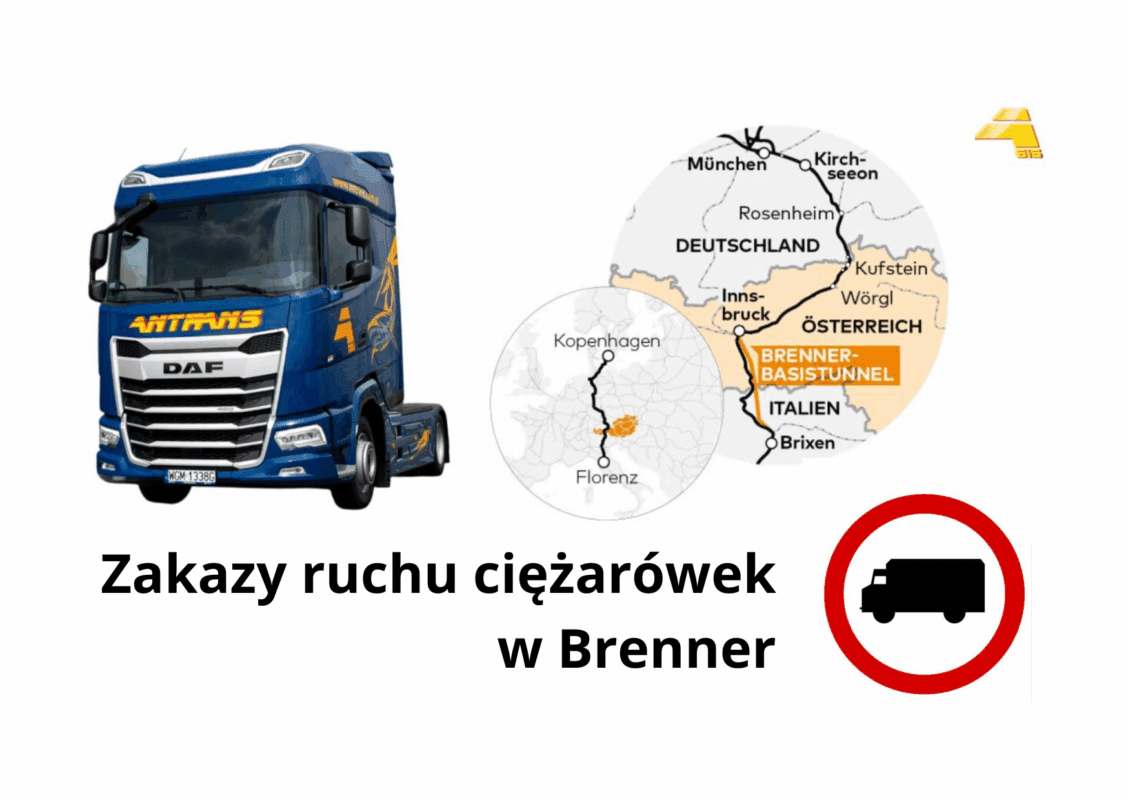
Brenner Truck Traffic Restrictions 2026

When planning transportation through the Brenner Pass in 2026, it’s important to keep in mind that truck traffic bans at the Brenner Pass may operate differently than typical weekend restrictions in many EU countries. On this route, the key factors are not only permanent bans during specific hours and days, but also practical transit restrictions, inspections, and periodic measures to regulate vehicle flow—all of which can quickly lead to traffic jams and delays during peak season.

In this guide, we’ve compiled the most important information about who is affected by the truck traffic bans in the Brenner Pass in 2026, when restrictions are in place on access routes on the Austrian and Italian sides, and how to plan your trip in practice so that to avoid fines and unplanned stops.

Get a Quote for Your Shipping Cooperation with carriers
Brenner Truck Traffic Restrictions

Truck Traffic Bans on the Brenner Pass in 2026

The Brenner Pass (Brennerpass / Brennero), the most important Alpine transport corridor connecting Germany with Italy via Austria, is facing its most challenging year in history in 2026. Truck traffic bans on the Brenner reached unprecedented levels in 2026: a total of 57 days of closures for trucks weighing more than 7.5 metric tons. The truck traffic bans include 36 days in the southbound direction (Austria–Italy) and 21 days in the northbound direction (Italy→Austria). In addition to the standard weekend and holiday truck bans, 14 entirely new days of restrictions were introduced directly due to the renovation of a key piece of infrastructure—the Lueg Bridge (Luegbrücke) on the A13 highway.

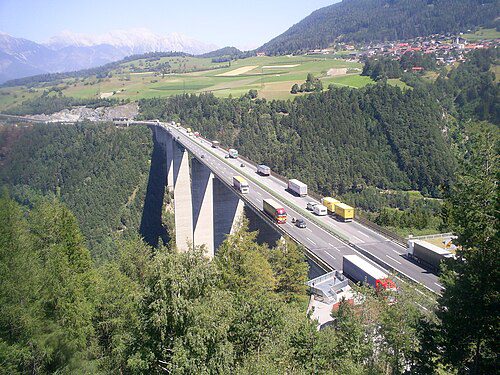
The reason for the stricter truck traffic restrictions is clear and serious: the 55-year-old Lueg Bridge, a key section of the A13 Brenner Highway between Innsbruck and the Italian border, requires urgent reconstruction for structural safety reasons. Since January 1, 2025, the bridge has been operating in emergency mode with one lane open in each direction. Truck traffic restrictions on this section apply specifically to vehicles weighing more than 3.5 metric tons, which may use only the left lane due to the structural strength of the bridge—the right lane is reserved for passenger cars.

The entire European transportation industry is feeling the impact of the introduction of extensive truck traffic bans. The Brenner Pass, through which more than 2.5 million trucks pass each year, is the main corridor connecting northern Germany with Italy, as well as a key route for Polish transport to Italy, Austria, and further south into Europe. The truck traffic bans introduced in Austria trigger automatic truck traffic bans on the Italian side – Austria and Italy have fully coordinated their truck traffic bans to prevent thousands of trucks from backing up at the Brenner border crossing.

Lueg Bridge

The Lueg Bridge (Luegbrücke) is a 1.8-kilometer-long viaduct built in 1969, located approximately 190 meters above the Sill River valley. It is one of the highest highway bridges in Europe and an absolutely critical component of the A13 Brenner Highway—there is no bypass or alternative route for heavy transport. Technical studies conducted by the Austrian highway authority ASFINAG have shown that the bridge’s structure requires immediate load reduction and a thorough reconstruction. It is precisely the condition of the Lueg Bridge that is the main reason for the introduction of emergency truck traffic bans in 2026.

The Lueg Bridge reconstruction project and the associated truck traffic restrictions are divided into three phases to be carried out by a consortium of Strabag and Porr for 217 million EUR:

  • Phase 1 (2025–2027): Construction of a new two-lane bridge parallel to the existing one. Traffic continues to use the old bridge on a one-way basis. Truck traffic restrictions are most stringent during this phase.
  • Phase 2 (2027–2028): Redirecting traffic to the new bridge. Demolition of the old bridge. Truck traffic restrictions will be partially lifted.
  • Phase 3 (2028–2030): Construction of a second new bridge. Completion of the work and restoration of the A13’s full four-lane capacity. Truck traffic restrictions related to the Lueg Bridge will be lifted.

Throughout the period leading up to 2030, truck traffic bans on the Brenner Pass will remain in effect to varying degrees, depending on the phase of construction. The year 2026 will see peak system load, as the bridge will still be operating in one-way mode, while intensive construction work begins, requiring additional nighttime truck traffic bans.

One-way system and restrictions on truck traffic bans

As of January 1, 2025, the Lueg Bridge has one lane in each direction. The key rule regarding truck traffic restrictions is that vehicles weighing more than 3.5 metric tons may only use the left lane. The right lane is reserved for passenger cars. Violating this ban results in heavy fines—an automatic weighing system embedded in the road surface detects any vehicle weighing more than 3.5 metric tons in the right lane and immediately directs it to a holding area in Nößlach or Brenner-Nord, where ASFINAG officers and the police issue a fine for violating the truck traffic restrictions.

On days with exceptionally heavy traffic, ASFINAG opens a second lane in one direction, allowing for two-way, two-lane traffic and partially mitigating the effects of truck traffic bans. This mainly applies to Saturdays during the summer. Decisions to open the second lane are made based on weather conditions and traffic volume. Information on current truck traffic bans and the status of the Lueg Bridge is published on the ASFINAG – Verkehrslage website.

Complete calendar of truck traffic bans on the Brenner Pass in Austria for 2026

Below is the complete calendar of truck traffic bans on the Brenner Pass in 2026 on the Austrian side. The truck traffic bans apply to the A12 Inntal, A13 Brenner, and A14 Rheintal/Walgau highways if the destination is the Italian border via the section of the A13 between the Nößlach and Brenner Nord interchanges. Truck traffic restrictions apply to vehicles and vehicle combinations with a gross vehicle weight rating exceeding 7.5 metric tons.

PERIOD / DATEDAYS OF THE WEEKPROHIBITION HOURSDIRECTIONROUTES AFFECTED BY THE RESTRICTION
Every Saturday, January 10 – March 14, 2026Saturdays (10 days)7:00 a.m. – 3:00 p.m.South (→Italy)A12, A13, A14 via Nößlach–Brenner Nord
March 28, 2026Saturday7:00 a.m. – 3:00 p.m.South (→Italy)A12, A13, A14 via Nößlach–Brenner Nord
Every Saturday, May 23 – June 6, 2026Saturdays (3 days)7:00 a.m. – 3:00 p.m.South (→Italy)A12, A13, A14 via Nößlach–Brenner Nord
Every Saturday, June 27 – September 26, 2026Saturdays (summer season – 14 days)7:00 a.m. – 3:00 p.m.South (→Italy)A12, A13, A14 via Nößlach–Brenner Nord
April 2, 2026Thursday7:00 a.m. – 10:00 p.m.South (→Italy)A12, A13, A14 via Nößlach–Brenner Nord
May 13, 2026Wednesday7:00 a.m. – 10:00 p.m.South (→Italy)A12, A13, A14 via Nößlach–Brenner Nord
May 22, 2026Friday7:00 a.m. – 10:00 p.m.South (→Italy)A12, A13, A14 via Nößlach–Brenner Nord
June 3, 2026Wednesday7:00 a.m. – 10:00 p.m.South (→Italy)A12, A13, A14 via Nößlach–Brenner Nord
October 2, 2026Friday7:00 a.m. – 10:00 p.m.South (→Italy)A12, A13, A14 via Nößlach–Brenner Nord
TRUCK TRAFFIC RESTRICTIONS IN THE NORTHBOUND DIRECTION (ITALY→AUSTRIA/GERMANY)
Every Saturday, January 10 – March 14, 2026Saturdays (10 days)7:00 a.m. – 3:00 p.m.North (→Austria)A13 Brenner Nord–Nößlach toward Innsbruck
Every Saturday, July 4 – August 29, 2026Saturdays (summer season – 9 days)7:00 a.m. – 3:00 p.m.North (→Austria)A13 Brenner Nord–Nößlach toward Innsbruck
April 10, 2026Friday7:00 a.m. – 10:00 p.m.North (→Austria)A13 Brenner Nord–Nößlach toward Innsbruck

Total for 2026: 36 days of southbound truck traffic bans + 21 days of northbound truck traffic bans = 57 days of closures at the Brenner Pass, of which 14 days are entirely new truck traffic bans introduced directly due to the renovation of the Lueg Bridge.

SA.DO.BRE Park-and-Ride Facility in Vipiteno

The SA.DO.BRE buffer parking lot (SA.DO.BRE freight terminal) in Vipiteno is a key hub for managing truck traffic restrictions on the Italian section of the Brenner Corridor. The parking lot can accommodate several hundred trucks and is managed by Autobrennero S.p.A. in cooperation with the Italian traffic police. The buffer parking system is an integral part of enforcing truck traffic bans on the Italian side.

Parking Rules During Truck Traffic Restrictions on SA.DO.BRE:

  • Vehicles stopped due to truck traffic restrictions must pull over to the SA.DO.BRE parking lot or other parking lots designated by the Polizia Stradale.
  • Access to the A22 northbound is blocked near Vipiteno while truck traffic restrictions are in effect—it is not possible to continue the journey until the restriction is lifted
  • Parking is free for trucks stopped by truck traffic restrictions
  • Lack of basic food service infrastructure—drivers must be prepared for stops lasting many hours during truck traffic bans and bring their own supplies
  • Now that the truck traffic restrictions have ended, vehicles are gradually being allowed onto the A22 in a controlled manner

Parking SA.DO.BRE is also used for trucks waiting to be loaded onto RoLa (Rolling Highway) trains—a rail-road system that transports trucks on railcars across the Alps, serving as an alternative to road restrictions on truck traffic.

Prohibitions under the regulation versus restrictions indicated by signs

In the Brenner region, truck traffic restrictions result from regulations in effect in both Austria and Italy, as well as from local signage and section-specific regulations on access roads. Therefore , it is essential to pay close attention to road signs and traffic announcements, as truck traffic bans may apply to specific days and times, selected sections of road, or certain types of cargo; during peak season, there are also inspections and measures to restrict vehicle traffic.

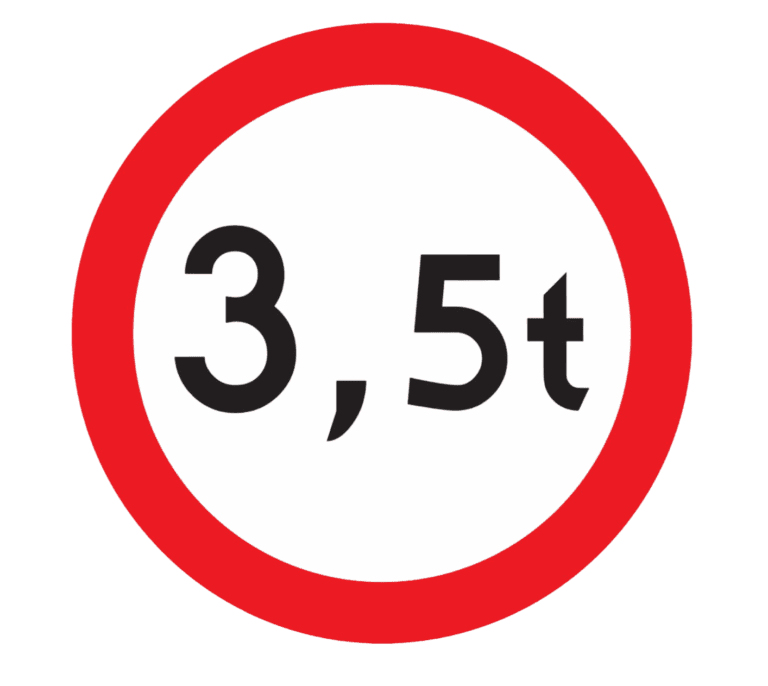
Mass

In the Brenner region, weight-based truck traffic restrictions most often apply to mountain sections, tunnels, overpasses, and access roads on the Austrian and Italian sides. If a sign includes a note regarding transit or access to a destination, truck bans may block transit traffic but allow deliveries or access to unloading points.

B-18

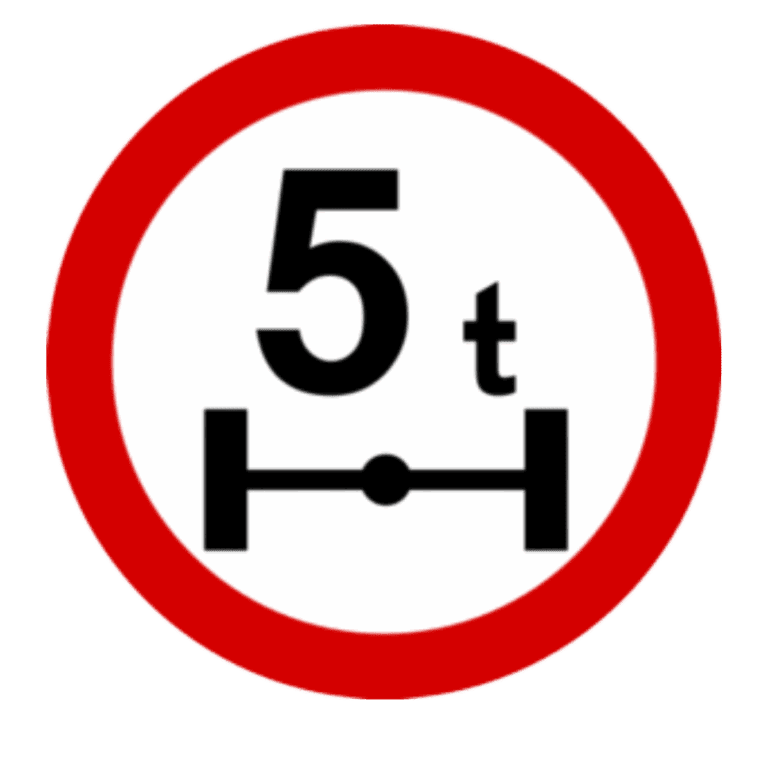
Axle load

Even if you are familiar with the general restrictions on truck traffic on the Brenner Pass, exceeding the axle load or combination parameters on mountain sections can result in a fine, being pulled over for inspection, and having to change your route or transload your cargo.

B-19

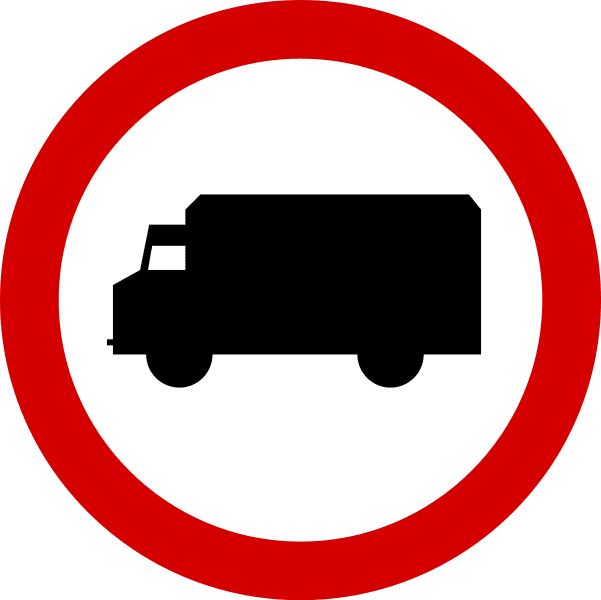
Truck Ban

Truck traffic restrictions may apply to entry onto a specific section of the Brenner route or on access roads on the Austrian and Italian sides, often during specific hours or for transit traffic, and exceptions are sometimes indicated on signs.

Truck Traffic Ban

Penalties for Violating Truck Traffic Restrictions on the Brenner Pass

Violations of truck traffic bans on the Brenner Pass result in heavy fines on both sides of the border. Enforcement of the truck traffic bans is carried out by Austrian ASFINAG patrols and police, as well as by the Italian Polizia Stradale. The system for monitoring truck traffic bans relies on stationary checkpoints and mobile patrols.

COUNTRYTYPE OF VIOLATION OF PROHIBITIONSPENALTY
🇦🇹 AustriaViolation of the ban on >7.5-metric-ton trucks on the A13 during the lockdownFines of up to several thousand EUR + vehicle turned back
🇦🇹 AustriaDriving in the right lane of the Lueg Bridge in a 3.5-metric-ton vehicle ( >) (automatically detected during restricted hours)Heavy administrative fine + referral to the Nößlach/Brenner-Nord impound lot
🇦🇹 AustriaViolation of sector-specific bans (transport of ore, metals, and fuels on the A12/A13 without an IG-L permit)Administrative fine + possible license revocation in case of repeat offenses
🇮🇹 ItalyViolation of truck traffic restrictions for vehicles weighing >7.5 metric tons on the A22 northbound (Vipiteno–Brenner)Italian fine + mandatory diversion to the SA.DO.BRE parking lot
🇮🇹 ItalyViolation of the no-passing rule on the A22 for >7.5-metric-ton vehicles carrying a full loadFine in accordance with the Italian Highway Code
🇦🇹 AustriaEntering the >12m exit ramp (Wattens A12, Innsbruck-Süd A13) during restricted hoursTicket + being turned around

Checkpoints enforcing truck traffic bans

Austria operates permanent checkpoints to enforce truck traffic bans at the following locations:

  • Pettnau (Oberland): Vehicle inspections on the A12 heading toward the A13 Brenner; enforcement of truck traffic restrictions
  • Kufstein (dosing point): checkpoint at the entrance to Tyrol from Germany; enforcement of truck traffic restrictions
  • Brenner Nord checkpoint immediately before the border crossing with Italy; enforcement of truck traffic restrictions
  • Nößlach: a holding lot for vehicles detected by automatic weighing systems during truck traffic bans

Italy is enforcing truck traffic restrictions on:

  • Vipiteno (Sterzing): Access to the A22 northbound is blocked during truck traffic restrictions
  • SA.DO.BRE Parking Lot: Traffic Police patrol monitoring vehicles waitingduring truck traffic bans

Drivers who violate truck traffic bans are turned back. Vehicles traveling from Italy after 10:00 p.m. on nights when truck traffic bans are in effect are sent back to Italy. It is not possible to “wait out” truck traffic bans in a queue, as the vehicle must leave the restricted zone.

The Most Common Mistakes and Pitfalls During Traffic Stops at the Brenner Pass

1

No documents confirming the exemption

At the Brenner Pass, “paperwork” is what counts at checkpoints. If you’re traveling under an exemption from the restrictions, make sure you have your CMR and the waybill/notification with the address and time on hand. Without confirmation of your destination, truck traffic bans may be treated as fully in effect.

2

Inaccurate description of the cargo in the CMR

General descriptions make it difficult to determine whether the shipment actually meets the conditions for the exception.
The CMR should include the name of the goods, the quantity, and the weight; a specification or packing list is also helpful.

3

Temperature-controlled transport with no data

If you’re driving a refrigerated truck or transporting a temperature-sensitive load, make sure you have the temperature requirements and a thermograph printout, if one is used. In the Brenner region, inspections are frequent, and a lack of documentation can prolong your stop even when the crossing itself is permitted despite truck traffic restrictions.

4

ADR without a complete set of documents

With ADR, oversights are the most costly. As a standard requirement, an ADR transport document, written instructions, vehicle markings, and the driver’s license are required. Incomplete documentation can result in the trip being halted, regardless of whether truck traffic restrictions are in effect at that time.

5

Driving through a restricted section without meeting the “minimum travel distance” requirement

On the Brenner, restrictions often apply to specific sections and to transit traffic. If you enter a route subject to restrictions, you must demonstrate that it is the shortest route to the loading or unloading location or that you meet the conditions for an exception. Otherwise, the authorities will treat this as a violation of truck traffic restrictions.

6

An “empty” trip without an operational justification

An empty vehicle should also have a documented purpose for the trip.
After unloading, it is helpful to have a signed unloading confirmation or CMR, and when picking up a load, a waybill or delivery notice.

Brenner Truck Traffic Restrictions
Magazyn-logistyka

Alternative Routes to the Brenner Pass

Truck traffic bans on the Brenner Pass are forcing carriers to consider alternative routes through the Alps. Each route that allows trucks to bypass these bans has its own advantages and disadvantages in terms of cost, travel time, and infrastructure limitations.

1. The Felbertauern Tunnel as an alternative when there are truck traffic bans

This is one of the most popular detour routes when travel through the Brenner Pass is difficult. The route goes through Kufstein, St. Johann in Tirol, Kitzbühel, and Mittersill, then through the Felbertauern Tunnel to Lienz (East Tyrol), and on toward Brixen (South Tyrol).

The cost of the tunnel is approximately 11 EUR per truck trip. If you exit the highway at Oberaudorf before Kufstein and take the national roads, you can travel this section without needing an Austrian vignette. Most importantly, this route avoids the delays associated with the Lueg Bridge, which often go hand in hand with truck traffic bans on the Brenner Pass.

However, the travel time is significantly longer. The Innsbruck–Brixen route via Felbertauern usually takes about 3.5–4 hours, while the Brenner route, without traffic jams or speed limits, can be completed in about 1.5 hours.

The advantages include lighter traffic than on the A13 and greater predictability during periods when truck bans block the standard route. The downsides are a longer route, higher fuel consumption, and restrictions for truck-trailer combinations that exceed the permitted dimensional limits.

2. The Reschen Pass in 2026 is not a viable alternative to truck traffic bans

In theory, the route through Landeck and over the Reschen Pass toward Vinschgau and Merano seems like a reasonable detour. In practice, however, it should not be considered a contingency plan in 2026.

The Reschen Pass is closed or heavily restricted due to the construction of a protective tunnel, and during certain periods, there are additional temporary closures on weekdays. This means that the pass does not solve the problem when truck traffic bans are in effect on the Brenner Pass.

The “through Switzerland” option, which is sometimes suggested, doesn’t help either, because it has restrictions on heavy vehicles, including truck-trailer combinations and parts of buses. The conclusion is simple. In 2026, the Reschen Pass should not be listed as an alternative for heavy transport.

3. Arlberg as an alternative route to western Italy when truck traffic bans block the Brenner Pass

If shipments are headed westward through Italy, some carriers are considering a route through Innsbruck, Landeck, and the Arlberg Tunnel, continuing through Vorarlberg toward Liechtenstein or Switzerland, and then heading south via the San Bernardino or Gotthard passes.

The toll for the Arlberg Tunnel is about 11.50 EUR, but the main cost comes in Switzerland. Truck transit is subject to the LSVA, which is very expensive compared to the Brenner.

Time-wise, it’s not a quick option either. For the Innsbruck–Milan route via San Bernardino, you usually have to add about 2–3 hours compared to the Brenner Pass, assuming no traffic jams. The advantage is that you bypass the entire Brenner corridor and the restrictions associated with the Lueg Bridge, so you avoid situations where truck traffic bans throw a wrench in your plans. The downsides are the high costs, the longer travel time, and the need to account for Swiss nighttime, Sunday, and holiday driving bans.

4. Tarvisio as an Eastern Alternative to Truck Traffic Bans on the Brenner Pass

For routes heading toward northeastern Italy, a sensible alternative is often to travel through Salzburg, Villach, and Tarvisio, and then on to Udine and the Venice area. On the Italian side, standard highway tolls apply, but the most important thing is that you completely bypass the Brenner Pass, so truck traffic restrictions on that route no longer apply.

For some routes from Poland to northeastern Italy, Tarvisio can actually be a shorter route than the Brenner Pass, even under normal conditions. The downside is that for shipments bound for western and central Italy, the route becomes significantly longer and often ceases to be cost-effective as a detour.

Antrans BiS – Logistics and Freight Forwarding

220 cars

Own and partner fleets available throughout Europe. Euro 6 vehicles, COIL MULDA/STANDARD/MEGA trailers, GPS monitoring and forwarders available 24/7 – we will always find a place for your transport.

32 years

32 years of experience in transport Poland-Europe. One of the oldest TSL companies in the region – we serve hundreds of companies in automotive, furniture, electronics and FMCG.

260,000 km

We handle more than 21,000 orders annually on European routes. Every day, an average of 58 Antrans Bis trucks serve customers in 7 EU countries, covering a total of 2.6 million kilometers per year.

260,000 km

We handle more than 21,000 orders annually on European routes. Every day, an average of 58 Antrans Bis trucks serve customers in 7 EU countries, covering a total of 2.6 million kilometers per year.

Costs of alternative routes to bypass truck traffic restrictions

According to a study conducted by the Italian Chamber of Commerce, the additional costs resulting from the need to circumvent truck traffic bans on the Brenner Pass amount to, on average:

  • The Felbertauern route adds +40–60 EUR in fuel costs and +2 hours in travel time (+driver labor costs) compared to the Brenner route, which has no truck traffic restrictions
  • Switzerland (Gotthard/San Bernardino) costs +150–200 EUR (LSVA tolls + fuel), and takes +2.5–3 hours compared to the Brenner Pass, with no truck traffic restrictions
  • Tarvisio costs +50–100 EUR, depending on the final destination in Italy, compared to Brenner, where there are no truck traffic restrictions

The total additional costs for the entire European transportation industry resulting from truck bans on the Brenner Pass and the need for detours are estimated at 174 million EUR per year, of which 93.5 million EUR directly affect freight transport.

Brenner Truck Traffic Restrictions

Truck traffic bans on the Italian side, specifically the A22 Brennero and the SA.DO.BRE buffer parking lot

Italy has imposed truck traffic bans on the A22 Brenner Highway in the autonomous province of Bolzano (Südtirol / Alto Adige), in full coordination with Austrian truck traffic bans. The purpose of the Italian truck traffic bans is to prevent a situation in which thousands of trucks accumulate at the Brenner border crossing, causing traffic gridlock in the tunnels and on the winding sections of the A22. The truck traffic bans in Austria and Italy operate as a single coordinated system.

Italian truck traffic restrictions include:

  • Every Saturday from January 10 to March 14, 2026: Truck traffic bans from 7:00 a.m. to 3:00 p.m.
  • Friday, April 10, 2026: Truck traffic bans from 7:00 a.m. to 10:00 p.m.

The truck traffic restrictions apply to trucks weighing more than 7.5 metric tons traveling northbound (verso nord) on the A22 from Vipiteno (Sterzing) toward the Austrian border.

Brenner Truck Traffic Restrictions in 2026
read more

The RoLa System as an Alternative to Truck Traffic Bans on the Brenner Pass

When truck traffic bans on the Brenner Pass cause delays, detours, or the risk of fines, RoLa—or the Rolling Highway—is a viable option. These are trains onto which entire truck convoys, along with their drivers, board and travel the critical section by rail, rather than planning a route “right under the nose” of authorities when bans aren’t in effect.

RoLa works simply: a truck drives onto a flatcar, and the driver rides along in the train. In practice, the most commonly used routes are Brennersee–Wörgl on the Austrian side and Brennersee–Trento on the Italian side, which allow drivers to cross the Brenner region without the stress of road restrictions. The cost of transporting a single truck is usually around 120–180 EUR, depending on the route and the vehicle’s emissions class. This is more than a standard trip, but often less than the combined costs of detours, parking, and time lost when truck bans block transit.

The biggest benefit is the predictability of deliveries. You avoid traffic jams, checkpoints, and the risk of roadblocks; the driver can use the trip to rest; and the vehicle experiences less wear and tear on mountain climbs. However, you need to take organizational limitations into account: advance booking is required, especially on weekends and during peak season, and departures are schedule-dependent and not available 24/7.

Sources and links to official regulations on truck traffic restrictions

ASFINAG, the Austrian Motorway Authority
https://www.asfinag.at/verkehr-sicherheit/aktuelle-verkehrslage/

Autobrennero S.p.A., operator of the A22 Brennero Highway (Italy)
https://www.autobrennero.it/en/on-the-road/travel-info/limits-and-bans/

Land Tirol, the provincial government of Tyrol
https://www.tirol.gv.at/

Rail Cargo Group’s RoLa system (trucks-on-trains)
https://www.railcargo.com/de/produkte-leistungen/kombiverkehr/rola

TrasportoEuropa – News on Truck Traffic Restrictions on the Brenner Pass
https://www.trasportoeuropa.it/english/

Transportation and Logistics

Cooperation with carriers

Antrans Bis from Olkusz invites carriers for long-term cooperation on international routes. For 32 years, we have specialized in full truckload shipments Poland-Italy and on European and domestic routes.

  • Fixed routes and regular orders on Poland-Italy and European lines
  • Timely payments, short settlement periods without delays
  • High monthly mileage, high earnings for experienced drivers
  • 24/7 support, availability of forwarders around the clock

We are currently looking for partners throughout Poland who have tractor-trailer combinations with curtain-sided semi-trailers.

FAQ: Brenner Truck Traffic Restrictions 2026 – Questions and Answers

How many days in 2026 will truck traffic bans be in effect on the Brenner Pass?

In 2026, truck traffic bans on the Brenner Pass will be in effect for a total of 57 days. 36 days of truck traffic bans in the southbound direction (Austria–Italy) and 21 days of truck traffic bans in the northbound direction (Italy–Austria). The truck traffic bans mainly apply on Saturdays from January through March and from June through September, as well as on selected weekdays with particularly high tourist traffic (Thursdays, Wednesdays, and Fridays before long weekends). All truck traffic bans are a direct consequence of the renovation of the 55-year-old Lueg Bridge on the A13 highway, which has been operating in emergency mode with one lane in each direction since January 2025. The full schedule of truck traffic bans is published by ASFINAG, the Austrian highway authority.

The Italian truck bans on the A22 Brenner Highway are a direct consequence of the Austrian truck bans and are intended to prevent thousands of trucks from backing up at the Brenner border crossing. If Austria were to block southbound traffic with its truck traffic bans, and Italy had not imposed its own truck bans on northbound traffic, a situation would arise in which hundreds of Italian trucks would attempt to enter Austria while traffic there is blocked. The result would be a complete traffic standstill in the tunnels and on the winding sections of the A22 near Vipiteno. The system of coordinated truck traffic bans between Austria-Italy was introduced by a decree of the Italian government commissioner for the province of Bolzano (No. 674 of January 8, 2026) precisely to maintain safety and traffic flow on both sides of the border. Trucks stopped by the truck traffic bans are directed to the SA.DO.BRE buffer parking lot in Vipiteno.

Yes, Saturday truck traffic bans are in effect from 7:00 a.m. to 3:00 p.m., which means that traveling at night (after 10:00 p.m. on Friday or before 7:00 a.m. on Saturday) and in the evening (after 3:00 p.m. on Saturday) allow you to avoid the truck traffic bans. However, it is important to note that in addition to the Saturday truck traffic bans, the standard Austrian Sunday truck traffic bans from 12:00 a.m.–10:00 p.m. for vehicles over 7.5 metric tons, as well as truck bans on public holidays. In addition, the Lueg Bridge operates with one lane in each direction, which means that traffic jams can form even outside of truck ban hours. The best strategy for avoiding truck traffic bans is to travel at night (11:00 PM–5:00 AM), when traffic volume is at its lowest. Be sure to check the current truck ban calendar on ASFINAG Verkehrslage before setting out.

Traveling through the Brenner Pass (A13) when there are no truck traffic restrictions costs 11 EUR for the Brenner special highway toll, plus the Austrian vignette (if using the A12) and the Italian A22 highway tolls. By comparison, bypassing truck traffic bans via the Felbertauern Tunnel costs 11 EUR (without a vignette, if exiting at Oberaudorf) plus an additional ~40–60 EUR in fuel costs due to the longer route. Bypassing truck traffic bans through Switzerland (Gotthard/San Bernardino) incurs an LSVA fee of ~270–280 EUR for a standard 40-metric-ton truck, plus a significantly longer route. Bypassing truck traffic bans via Tarvisio incurs additional costs depending on the final destination in Italy. According to a study by the Chamber of Commerce, the average additional cost of bypassing truck traffic bans on the Brenner Pass ranges from 40 to 200 EUR per trip, depending on the alternative route chosen. The RoLa system (truck train) as an alternative to truck traffic bans costs 120–180 EUR for transport between Brennersee and Wörgl or Brennersee and Trento.

Trucks stopped by the Italian Polizia Stradale during truck traffic bans on the A22 Brennero are directed to the SA buffer parking lot.DO.BRE in Vipiteno (Sterzing), where they must wait until the truck traffic bans are lifted. Parking is free for vehicles stopped due to truck traffic bans, but the facilities are minimal—there are no restaurants, showers, or stores. Drivers must be prepared for stops lasting many hours during truck traffic bans and bring their own supplies of food and water. Once the truck traffic bans end, vehicles are gradually released onto the A22 in a manner controlled by the Polizia Stradale to avoid secondary congestion on the highway. Attempting to bypass the roadblock or driving in violation of truck traffic bans results in a hefty Italian fine and being forced to turn back. Access to the A22 northbound from Vipiteno during truck traffic bans is physically blocked by a police patrol.

Yes, truck traffic restrictions on the Brenner Pass will remain in effect to varying degrees until the renovation of the Lueg Bridge is completed in 2030. The construction schedule for the bridge and the associated truck traffic restrictions is divided into three phases: 2025–2027—construction of the first new bridge while traffic continues on the old bridge, with the strictest truck traffic restrictions in place; 2027–2028: demolition of the old bridge after traffic has been transferred to the new one, with a partial reduction in truck traffic restrictions; 2028–2030: construction of the second new bridge and the gradual lifting of truck traffic restrictions. The year 2026 will see peak system load, with 57 days of truck traffic bans. In 2027–2028, the number of days with truck traffic bans is expected to decrease, but they will not disappear entirely. Austria has announced that two-way traffic will be possible on approximately 180 days per year (primarily in the summer) with fewer truck bans, though this will depend on the progress of construction work and weather conditions. Carriers planning regular routes through the Brenner Pass should monitor official announcements regarding truck bans on the ASFINAG website and consider long-term strategies for circumventing truck bans or using the RoLa system.

The truck traffic bans on the Brenner Pass are based on regulations in Austria and Italy, but in practice, “operational” restrictions along the transit corridor—that is, periodic suspensions and traffic regulations on access roads—also have the greatest impact on transit. The problem most often arises on weekends, holidays, and during periods of heavy seasonal traffic, when traffic jams and delays are common. That’s why, before setting out, it’s a good idea to check not only the calendar of traffic restrictions but also traffic reports and current delays on the A12, A13, and A22, as these factors determine whether your trip will go smoothly or end in a traffic jam—even if there’s no “hard” restriction in place.

The truck traffic bans on the Brenner Pass primarily apply to heavy vehicles in transit, and their scope may vary depending on the section, day, and hours in effect. In practice, you’ll most often encounter restrictions that affect transit travel, while exceptions are usually provided for travel to a loading or unloading site, deliveries to a destination, and “necessary” trips, provided they meet the conditions specified in the regulations or on the signs below the traffic signs. The key point is that, in the event of an inspection, you must be able to prove this exception with documentation, because a mere “explanation” will not justify your passage when truck traffic restrictions are in effect.

If you violate the truck traffic restrictions on the Brenner Pass, you risk a fine, but just as often, the problem is the decision to suspend further travel until the restrictions are lifted. In practice, it’s not the fine itself that hurts the most, but the additional costs—namely, the forced stop, the loss of the unloading time window, delays in the supply chain, and the risk of further inspections on access routes. If the driver does not have a complete set of documents confirming the purpose of the trip or an exemption, the inspector may treat the trip as a full violation of the ban, even if the carrier was “in the right” from an operational standpoint. That is why documentation is essential at the Brenner Pass, as it is usually what determines whether the situation ends with a brief inspection or a costly delay.

Opinie klientów przepisy