Truck Traffic Restrictions in Poland 2026

Planning transportation in Poland requires a good understanding of the current traffic restrictions for trucks. In 2026, truck traffic bans in Poland will include holiday bans, summer vacation bans, and pre-holiday bans, which may significantly affect delivery schedules. Ignorance of the regulations may result in fines of up to 2,000 zł for the carrier and impoundment of the vehicle until the ban is lifted.

This guide contains a complete calendar and list of truck traffic restrictions in Poland for 2026, detailed information on the hours during which these restrictions apply, exceptions for perishable goods, and a comparison of Polish regulations with those in other European countries.

Arrange Freight Transport Orders for Carriers
Truck Traffic Restrictions in Poland

Schedule of Truck Traffic Restrictions in Poland for 2026

In Poland, truck traffic bans are in effect on all public holidays and during the summer vacation period. The ban applies to vehicles with a gross vehicle weight rating exceeding 12 metric tons. This is a higher threshold than in most European countries, where the limit is typically 7.5 metric tons. The regulations are set forth in a decree issued by the Minister of Infrastructure and are intended to improve road safety on days with increased tourist traffic.

The standard ban on trucks in Poland is in effect on holidays from 8:00 a.m. to 10:00 p.m., and on the day before holidays from 6:00 p.m. to 10:00 p.m. Additionally, during the summer vacation period (June 21 through August 31), restrictions are in place on weekends—specifically on Fridays, Saturdays, and Sundays. Poland’s system of driving bans is relatively lenient compared to that of Germany or Austria, but ignoring the regulations results in fines and delays in deliveries.

Table of Truck Traffic Restrictions During the Holidays in Poland in 2026

DateDay of the weekHolidayRestriction hours
JANUARY
January 1ThursdayNew Year’s Day8:00 a.m. – 10:00 p.m.
January 6TuesdayEpiphany8:00 a.m. – 10:00 p.m.
APRIL
April 4SaturdayEaster Eve6:00 p.m. – 10:00 p.m.
April 5SundayEaster (first day)8:00 a.m. – 10:00 p.m.
April 6MondayEaster Monday8:00 a.m. – 10:00 p.m.
MAY
April 30ThursdayThe day before Labor Day6:00 p.m. – 10:00 p.m.
May 1FridayLabor Day8:00 a.m. – 10:00 p.m.
May 3SundayMay 3 Constitution Day8:00 a.m. – 10:00 p.m.
May 23SaturdayThe Eve of Pentecost6:00 p.m. – 10:00 p.m.
May 24SundayPentecost8:00 a.m. – 10:00 p.m.
JUNE
June 3WednesdayThe Eve of Corpus Christi6:00 p.m. – 10:00 p.m.
June 4ThursdayCorpus Christi8:00 a.m. – 10:00 p.m.
AUGUST
August 14FridayThe Eve of the Assumption of the Blessed Virgin Mary6:00 p.m. – 10:00 p.m.
August 15SaturdayAssumption of the Blessed Virgin Mary8:00 a.m. – 10:00 p.m.
NOVEMBER
October 31SaturdayAll Saints’ Eve6:00 p.m. – 10:00 p.m.
November 1SundayAll Saints’ Day8:00 a.m. – 10:00 p.m.
November 10TuesdayThe day before Independence Day6:00 p.m. – 10:00 p.m.
November 11WednesdayNational Independence Day8:00 a.m. – 10:00 p.m.
DECEMBER
December 23WednesdayChristmas Eve6:00 p.m. – 10:00 p.m.
December 24ThursdayChristmas Eve8:00 a.m. – 10:00 p.m.
December 25FridayChristmas (first day)8:00 a.m. – 10:00 p.m.
December 26SaturdayChristmas Day (Day 2)8:00 a.m. – 10:00 p.m.
EVERY SUNDAY OF THE YEAR
Every Sunday throughout 2026Public holiday8:00 a.m. – 10:00 p.m.

Summer Truck Traffic Restrictions in Poland 2026 (June 21 – August 31)

Day of the weekRestricted hoursNotes
Fridays6:00 p.m. – 10:00 p.m.EVERY Friday during summer break
Saturdays8:00 a.m. – 2:00 p.m.EVERY Saturday during summer vacation
Sundays8:00 a.m. – 10:00 p.m.Standard Sunday closure (year-round)

Prohibitions under the regulation versus restrictions indicated by signs

In practice, there are two separate levels of restrictions. The first consists of periodic truck traffic bans mandated by regulation (holidays and summer vacation) for vehicles with a gross vehicle weight rating (GVWR) exceeding 12 t. The second consists of local restrictions indicated by traffic signs, which may be in effect year-round and apply only to specific sections of road (e.g., city entrances, bridges, detours). Even if you’re allowed to drive according to the “calendar,” a traffic sign may block your route.

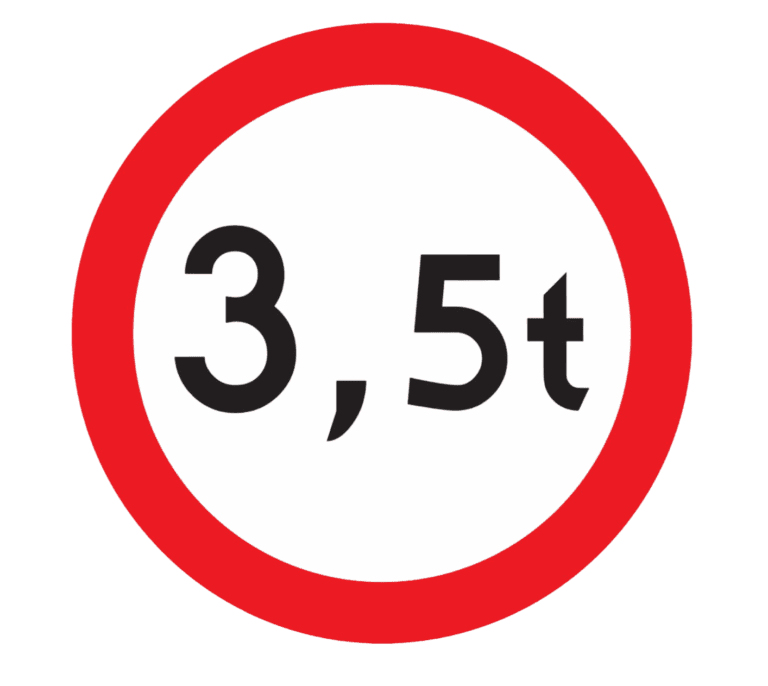
B-18

Vehicles with an actual gross weight exceeding the value shown on the sign are prohibited from entering (the actual weight is what counts here, not just the gross vehicle weight rating).

B-18

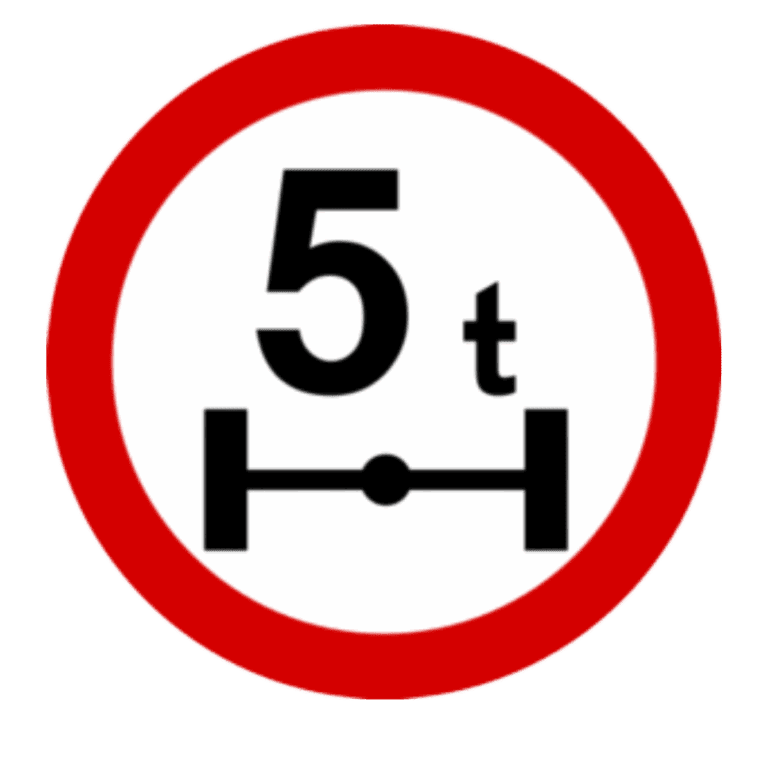
B-19

No entry for vehicles with an axle load greater than the value indicated on the sign (common on bridges and sections with limited load-bearing capacity).

B-19

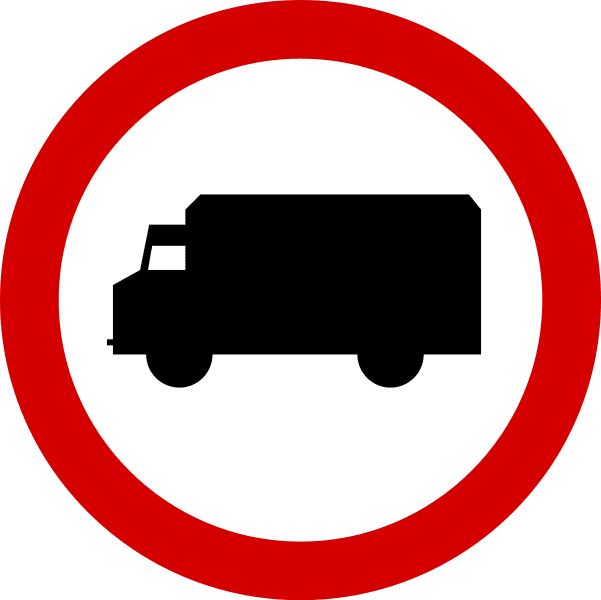
B-5

No entry for trucks (by definition, this includes trucks with a gross vehicle weight rating (GVWR) of more than 3.5 metric tons; the weight is often specified on the sign).

Truck Traffic Ban

Penalties for Violating Truck Traffic Restrictions in Poland

Violations of truck traffic restrictions in Poland result in fines for three parties simultaneously: the driver, the carrier, and the person managing the transport. The total fine can amount to up to 3,500 zlotys, which makes Polish regulations relatively moderate compared to other European countries. In Italy the fine can reach 5,079 euros, and in Austria it can be as high as 7,200 euros for violating a sector-specific ban.

A driver operating a vehicle during a ban is subject to a fine of 200 to 500 zlotys. The amount of the fine is at the discretion of the officer conducting the inspection. A transport company (the company that owns the vehicle) is fined 2,000 zlotys, which is the highest penalty in the entire system. The person managing the transport (freight forwarder or dispatcher responsible for route planning) is subject to a fine of 1,000 zlotys. These penalties demonstrate that it is absolutely essential to be familiar with truck traffic restrictions in Poland if you want to avoid a fine.

In addition to the financial consequences, traffic enforcement officers have the right to impound the vehicle until the restriction ends. This means that the truck must remain in the parking lot or at the checkpoint until 10:00 p.m. on holidays or until the weekend restriction ends. The driver cannot continue driving even after paying the fine. Detaining the vehicle results in additional losses, such as delivery delays, contractual penalties from customers, parking fees, and drivers’ wages for the downtime.

Penalties for Violating the Truck Ban in Poland

Who Gets a TicketAmount of the fine
Driverup to 500 zł
Business owner (carrier)up to 2,000 PLN
Transport Managerup to 1,000 PLN
Additional consequences: entry in the record of administrative offenses, increased risk of inspection by the ITD, potential problems with contracts

Source: General Inspectorate of Road Transport (GITD)

Exceptions to the ban on heavy-duty trucks in Poland

The ban does NOT apply to vehicles transporting:

  • Perishable goods (meat, fish, dairy products, fruits, vegetables, flowers)
  • Medicines and medical supplies
  • Fuels (gasoline, diesel, gas)
  • Live animals

The ban does NOT apply to the following vehicles:

  • Those participating in rescue and humanitarian operations
  • Those who respond to accidents and natural disasters
  • Those returning from abroad until the completion of international transport
  • People waiting at the border to leave the country

What documentation is required? You must have a CMR form with a detailed description of the cargo, as well as documents from the shipper/consignee confirming the nature of the shipment.

Additional consequences include an entry in the record of administrative offenses, an increased risk of future inspections by the ITD, and potential problems with contracts if the customer suffers losses due to a missed delivery deadline. In extreme cases, repeated violations may result in the revocation of the transport license.

Source: General Inspectorate of Road Transport (GITD)

The Most Common Mistakes and Pitfalls During ITD Inspections

1

No documents confirming the exemption

If the basis for the exemption cannot be substantiated with documents, the ITD may challenge it.
In practice, you will need a CMR form and either a transport order or a shipping document/specification from the shipper.

2

Inaccurate description of the cargo in the CMR

General descriptions make it difficult to determine whether the shipment actually meets the conditions for the exception.
The CMR should include the name of the goods, the quantity, and the weight; a specification or packing list is also helpful.

3

Temperature-controlled transport with no data

For sensitive cargo, transport conditions—especially temperature—are critical. It is a good idea to have a specification sheet with temperature requirements and a printout or record from the temperature logger, if one is used.

4

ADR without a complete set of documents

For ADR shipments, exemptions may depend on the completeness of the documentation and the compliance of the labeling.
As a general rule, an ADR waybill, written ADR instructions, and a valid ADR driver’s license are required.

5

Returning from abroad without proof of travel

The very fact of the “return” should be evident from the documents and the continuity of the route.
The most helpful documents are usually the CMR for the international leg, customs documents (if any), and the TMS/GPS report.

6

An “empty” trip without an operational justification

An empty vehicle should also have a documented purpose for the trip.
After unloading, it is helpful to have a signed unloading confirmation or CMR, and when picking up a load, a waybill or delivery notice.

Legal Basis and Purpose of the Restrictions

Restrictions on truck traffic in Poland are governed by the Regulation of the Minister of Transport dated July 31, 2007, on periodic restrictions and bans on the movement of certain types of vehicles on roads, as amended. This document precisely specifies the days and hours during which vehicles with a gross vehicle weight rating exceeding 12 metric tons are prohibited from traveling on public roads. The regulation also establishes a list of exceptions, including emergency vehicles, the transport of perishable goods, and other categories of priority transport.

The primary goal of implementing temporary truck traffic bans is to relieve pressure on the road infrastructure during periods of heavy passenger vehicle traffic. On holidays and summer vacation weekends, Polish roads—especially the A1, A2, and A4 highways—experience a significant increase in traffic volume due to vacation trips, visits to family, and tourist travel. The presence of heavy transport vehicles under such conditions would lead to long traffic jams, longer travel times, and an increased risk of traffic accidents.

Another important aspect is improving the capacity of national roads and highways. Due to their design and speed limits, trucks naturally slow down traffic, especially on single-lane sections and in areas where roadwork is underway. Removing them from traffic during peak vacation periods allows for a smoother flow of passenger cars, shorter travel times, and a more comfortable driving experience. For carriers, this means they must carefully plan their deliveries around the schedule of truck bans, but it also protects them from getting stuck in traffic jams lasting many hours, which would result in additional fuel costs and delays in their schedules.

It is also worth noting that Poland’s system of restrictions on heavy trucks is relatively liberal compared to the regulations in force in other European countries. The 12-metric-ton GVW threshold and the absence of a year-round nighttime driving ban mean that the TSL industry in Poland has greater operational flexibility than, for example, in Austria or Germany. Nevertheless, compliance with the regulations remains mandatory, and financial penalties and vehicle impoundment effectively compel carriers to adhere to the applicable restrictions.

Truck Traffic Restrictions in Poland 2026
Antrans BiS Logistics and Freight Forwarding Fleet

Who is affected by the truck traffic bans in Poland?

The traffic ban in Poland applies to vehicles and vehicle combinations with a gross vehicle weight rating (GVWR) exceeding 12 metric tons. This is the highest threshold in Europe. In Germany, Austria, and Italy, the ban starts at 7.5 metric tons. The restrictions apply to trucks, tractor-trailers, and vehicle combinations with a gross vehicle weight exceeding 12 metric tons. Vans and delivery trucks such as the Mercedes Sprinter, VW Crafter, or Ford Transit with a gross vehicle weight rating (GVWR) of up to 12 metric tons may drive without restrictions, even on holidays and summer weekends.

Vehicles Fully Exempt from Restrictions

The ban does not apply to public service vehicles: the Police, the Road Transport Inspection, the Customs Service, the Border Guard, the Polish Armed Forces, and the Government Protection Bureau. Emergency vehicles, such as fire trucks, technical rescue vehicles, chemical rescue vehicles, and radiation protection vehicles, are also exempt. The same applies to vehicles participating in special operations: disaster relief, accident response, and rescue and humanitarian operations.

Transportation of Priority Products

You may drive despite the ban if you are transporting perishable goods such as fresh meat, fish, milk, vegetables, fruit, and bread. The exemption also applies to the transport of live animals (cattle, pigs, poultry), postal and courier shipments, medical and pharmaceutical supplies, and construction materials for roads and bridges. Vehicles serving mass events may also drive without restrictions. Frozen products may not be considered perishable, so always check with the inspection authorities for clarification.

Returning from Abroad and the Border Zone

The exemption applies to vehicles returning from abroad to their base in Poland or traveling to the recipient of the goods. You may also drive within a 50-km radius of the border if you entered Poland before the ban took effect and need to reach your base within that radius. The truck traffic ban does not apply to empty vehicles, vehicles returning from unloading, or those waiting at the border to enter Poland.

Required Documentation

When taking advantage of the exemption, you must have a CMR form with a detailed description of the goods (name, quantity, temperature) as well as customs and border documents when returning from abroad. Company vehicles require proof of affiliation with the relevant organization. Failure to provide the proper documentation will result in a fine and impoundment of the vehicle, even if you actually meet the conditions for the exemption.

Antrans BiS – Logistics and Freight Forwarding

220 cars

Own and partner fleets available throughout Europe. Euro 6 vehicles, COIL MULDA/STANDARD/MEGA trailers, GPS monitoring and forwarders available 24/7 – we will always find a place for your transport.

32 years

32 years of experience in transport Poland-Europe. One of the oldest TSL companies in the region – we serve hundreds of companies in automotive, furniture, electronics and FMCG.

260,000 km

We handle more than 21,000 orders annually on European routes. Every day, an average of 58 Antrans Bis trucks serve customers in 7 EU countries, covering a total of 2.6 million kilometers per year.

260,000 km

We handle more than 21,000 orders annually on European routes. Every day, an average of 58 Antrans Bis trucks serve customers in 7 EU countries, covering a total of 2.6 million kilometers per year.

Exceptions to the ban in Poland

The Regulation of the Minister of Transportation provides for a broad range of exemptions for specific types of cargo and vehicles. The ban does not apply to vehicles transporting perishable goods such as fresh meat, fish, dairy products, fruits, vegetables, and flowers. The exemption also covers medicines and medical supplies, fuels (gasoline, diesel, gas), and live animals that require continuous transport for their welfare.

Vehicles involved in rescue and humanitarian operations may travel without restrictions, regardless of the day or time. This also applies to vehicles responding to accidents and natural disasters, as well as those returning from abroad to complete an international transport operation. Vehicles waiting at the border to enter the country and those located within a 50-kilometer zone of the border are also exempt from the ban.

Required Documentation

To take advantage of the exemption, you must have a CMR form with a detailed description of the cargo, as well as documents from the shipper or recipient confirming the nature of the shipment. For perishable goods, the waybill must include the product name, quantity, weight, and storage conditions (temperature in the cold storage). When returning from abroad, you must have customs and border documents showing the date and time of crossing the border. Failure to provide the proper documentation will result in a fine and the impoundment of the vehicle, even if the formal requirements for the exemption have been met.

Truck Traffic Ban

How can I plan routes while taking traffic restrictions in Poland into account?

Modern transport management systems (TMS) and navigation apps for trucks automatically take into account traffic restrictions in Poland and throughout Europe when planning routes. These tools precisely calculate route length, estimate travel time, and calculate the total cost of transport, taking into account tolls, fuel consumption, and delays resulting from traffic restrictions.

Automatic Incorporation of Restrictions into TMS Systems

Professional TMS systems allow you to enter vehicle parameters (GVW, cargo type) and automatically exclude hours during which traffic restrictions are in effect. This allows the dispatcher to see the available time slots for the shipment and plan the trip so that the vehicle reaches its destination before the restriction begins or after it ends. Automating this process eliminates the risk of human error, which could result in a fine and the vehicle being impounded.

Navigation Apps for Trucks

Specialized navigation apps for trucks (Sygic Truck, TomTom Trucker, Garmin Dezl) include up-to-date databases of driving restrictions for all European countries. The apps alert the driver if the planned route conflicts with a restriction and suggest alternative departure times or detours. These features operate in real time, also taking into account road closures, weight restrictions on bridges, and restrictions on entering city centers.

Benefits of Automated Scheduling

The use of route planning automation tools reduces freight forwarders’ working time by 30–40%, as the system automatically verifies that routes comply with regulations instead of manually checking the calendars of driving restrictions for each country. It also reduces the risk of delivery delays caused by unexpectedly encountering a restriction, which translates to higher customer satisfaction and fewer contractual penalties for missed deadlines.

Integration with fuel cards and tolls

Advanced TMS systems integrate with fuel cards (e.g., DKV, UTA, Eurowag) and electronic toll collection systems (viaTOLL, e-TOLL). This allows the freight forwarder to see not only the optimal route in terms of traffic restrictions, but also the cheapest one in terms of fuel and toll costs. The system can automatically select a route that is 50 km longer but 200 zł cheaper if it avoids a toll highway and a traffic ban during a holiday weekend.

Real-time regulatory updates

Truck traffic bans in individual countries are subject to change. New holidays, shifts in vacation dates, and the introduction of additional local restrictions. Professional TMS systems receive automatic updates from official sources (GITD in Poland, BAG in Germany, ASFINAG in Austria), ensuring that dispatchers always work with the most up-to-date information without having to manually check regulations.

Transportation and Logistics

COOPERATION WITH CARRIERS

Antrans Bis from Olkusz invites carriers for long-term cooperation on international routes. For 28 years, we have specialized in full-truckload transport between Poland and Italy, as well as on European and domestic routes.

  • Fixed routes and regular orders on Poland-Italy and European lines
  • Timely payments, short settlement periods without delays
  • High monthly mileage, high earnings for experienced drivers
  • 24/7 support, availability of forwarders around the clock

We are currently looking for partners throughout Poland who have tractor-trailer combinations with curtain-sided semi-trailers.

Start cooperation

FAQ: Truck Traffic Restrictions in Poland in 2026 – Questions and Answers

Will there be a ban on truck traffic in Poland in 2026?

Yes, in 2026, Poland has periodic truck traffic bans in effect. These mainly concern holiday bans, pre-holiday bans, and summer vacation bans, and they have a real impact on transportation planning, delivery schedules, and the risk of being detained after an inspection.

The ban on truck traffic in Poland is most often in effect on holidays from 8:00 a.m. to 10:00 p.m., and on certain days preceding holidays from 6:00 p.m. to 10:00 p.m. During the summer vacation period, truck traffic restrictions apply on weekends and include Fridays from 6:00 p.m. to 10:00 p.m., Saturdays from 8:00 a.m. to 2:00 p.m., and Sundays from 8:00 a.m. to 10:00 p.m., unless an exception applies.

No, there is no general ban on trucks driving every Sunday throughout the year in Poland. Sunday restrictions are most often due to summer holidays and the fact that some public holidays fall on a Sunday; therefore, in practice, one must rely on the 2026 calendar of truck traffic restrictions rather than on the simplified version.

Penalties for violating the truck traffic ban in Poland may apply simultaneously to the driver, the carrier, and the person managing the transport; in practice, there is also the risk of being forced to remain parked until the end of the ban. The most costly consequences are usually the operational ones—that is, delays, missed unloading windows, and contractual penalties—because the truck cannot continue its journey even after a fine has been issued.

Yes, there are exceptions that allow you to drive even when there is a ban on heavy trucks. They most often concern the transport of perishable goods, medicines and medical supplies, fuels, and live animals, as well as trips related to rescue operations, emergency response, and the aftermath of natural disasters, and certain situations involving international transport. In practice, the key factor is whether you can document the exception with supporting documents during an ITD inspection.

It depends on the type of frozen product and whether it is classified as perishable. In practice, some frozen products may qualify for an exemption, but only if the shipping documents clearly indicate what is in the trailer and in what quantities, and the shipment actually meets the conditions of the exception.

You must have a complete set of documents that unequivocally confirm that the shipment meets the conditions for an exemption from the truck traffic ban. The basis is the CMR form with a detailed description of the cargo; in practice, a transport order, a shipping document (WZ), or a goods specification from the shipper or consignee is very helpful. For refrigerated transport, details regarding the conditions of transport—including temperature—are crucial, and for ADR shipments, transport documentation and the driver’s certification are required, as a lack of proper paperwork can invalidate the exemption during an ITD inspection.

Yes, an empty vehicle may take advantage of the exemptions, but only if the trip is directly related to the transport covered by the exemption—for example, a trip to pick up a load or a return trip after unloading. In practice, you have to prove this by showing documents that confirm where you’re coming from and where you’re going, as well as why this trip is part of a specific job, because without context, an empty truck is often questioned.

There are situations in which travel related to returning from abroad or movement near the border is not prohibited, but requires clear confirmation of the route taken. It is safest to have documents from the international leg of the trip, as well as receipts that show the continuity of the route and the time of border crossing, because these are the details the ITD most often asks about during inspections.

carrier-zone
Opinie klientów przepisy