


TIR transport price per km 2026 depends not only on the length of the route, but also on fuel, e-TOLL, foreign tolls and availability of return cargo. Check out current domestic and international rates, sample route quotes and the most important factors affecting the cost of transportation.
Category Archives: Transport
Transport rates and prices per km
How much does TIR transportation cost per km in 2026?
The rate for TIR transport in Poland in 2026 is between PLN 3.50 and PLN 5.50 net per km for domestic transport. In international transport, rates range from €1.20 to €2.20 per km depending on the direction – the most expensive are Scandinavian and Iberian routes, the cheapest Eastern European. The final price is affected by tolls, loading time, type of trailer and current fuel prices. Detailed rates by direction can be found in the article International transport – price per km in 2026.
How much does domestic transportation cost per km in 2026?
Domestic transportation is priced at PLN 3.00 to PLN 4.50 net per km for a standard truck set in 2026. For loads up to 10 tons, the rates are lower, ranging from PLN 2.50 to PLN 3.80 per km, while for 25 tons they rise to PLN 4.00-5.50 per km due to higher fuel consumption and technical requirements of the vehicle. Detailed calculations for specific tonnages are described in the articles transport 10 tons per km and transport 25 tons per km.
How much does low-loader transportation cost per km?
Low-loader transport (excavators, agricultural machinery, construction equipment) costs from PLN 6 to PLN 15 per km, depending on the weight, dimensions and required oversize permits. For machines over 40 tons, a permit from the General Directorate for National Roads and Motorways is required, which extends the implementation by several days and raises the cost of the service by up to 30-50%. Prices for specific machines are described in the articles excavator transport – price per km and agricultural machinery transport – price per km.
How much does refrigerated transport cost per km?
Refrigerated transport rates range from PLN 4.50 to PLN 7.00 per km for domestic transport in 2026. The price is influenced by the required temperature ( ATP/FRC certificate), distance and seasonality – in summer the rates increase by up to 20-30% due to higher market demand. International refrigerated transport is priced individually and depends on the direction and temperature requirements.
How much does oversize transportation cost per km?
Oversize transport is one of the more expensive types of services – rates start at PLN 8 per km and can exceed PLN 25 per km for very heavy or wide loads requiring pilotage and special permits. The cost of oversize permits ranges from 100 to several thousand zlotys, depending on the category. You can find a pricing calculator in the article on oversize transport prices.
Regulations, licenses and paperwork
Which PAC to choose for a transportation company?
The main PKD code for road transport of goods is 49.41.Z. Companies engaged in freight forwarding choose 52.29.C, and passenger transport – 49.39.Z. It is worth registering several codes at the same time, because it does not generate additional costs, and gives flexibility in expanding the offer. The full list of codes and tips on which one to choose as the dominant one is described in the article transport company PKD 49.41.Z – which PKD to choose.
How much does a license to operate a transportation company cost?
A community license for road freight transport costs between PLN 4,000 and PLN 8,000, depending on the number of excerpts. To obtain it, you need a CPC certificate of professional competence, an operating base and financial capacity: €9,000 for the first vehicle and €5,000 for each subsequent vehicle. The waiting time for a decision is between 4 and 8 weeks. We describe the detailed requirements, documents and deadlines in the article on the license for a transport company.
What are the new regulations for tachographs in buses from 2026?
As of 2026, new regulations are in effect extending the requirement to install 2nd generation smart tachographs (Smart 2) to more categories of vehicles, including vans used in commercial transportation. The tachograph is mandatory in vehicles with a gross vehicle weight of more than 3.5 tons in international traffic. Detailed rules, exceptions and penalties for lack of a tachograph are described in the article Tachographs in buses from 2026 – new obligations for carriers. The installation obligation is regulated by EU Regulation 165/2014.
What does the Incoterms DAP rule mean and when to use it?
The DAP (Delivered at Place) rule from Incoterms 2020 means that the seller bears the costs and risks of transportation up to the designated place of delivery – without unloading. The buyer is responsible for import, customs duties and unloading. DAP is one of the most preferred rules for trade with non-EU countries, because it clearly allocates the parties’ responsibilities. For a full explanation with examples, see the article DAP Incoterms 2020 – what the Delivered at Place rule means.
Types of transportation, equipment and cargo
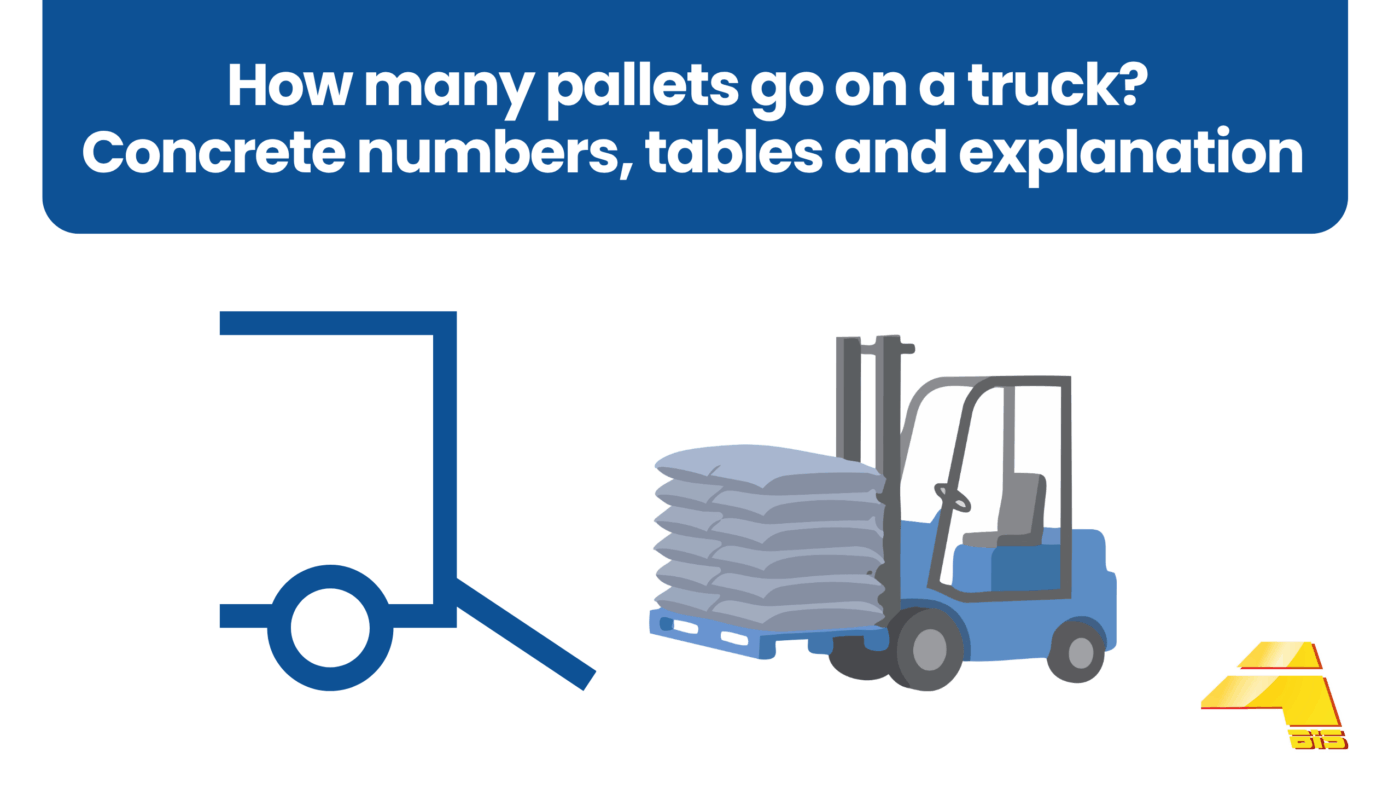
How many pallets go on the truck?
The standard 13.6-meter-long semi-trailer accommodates 33 Euro pallets (120×80 cm) in a single layer, or 66 pallets when loaded in a pile. Industrial pallets (120×100 cm) fit 26 in number. The maximum overall height of the set is 4 meters. We describe the specific numbers and pallet layout diagrams in the article How many pallets go on a truck.
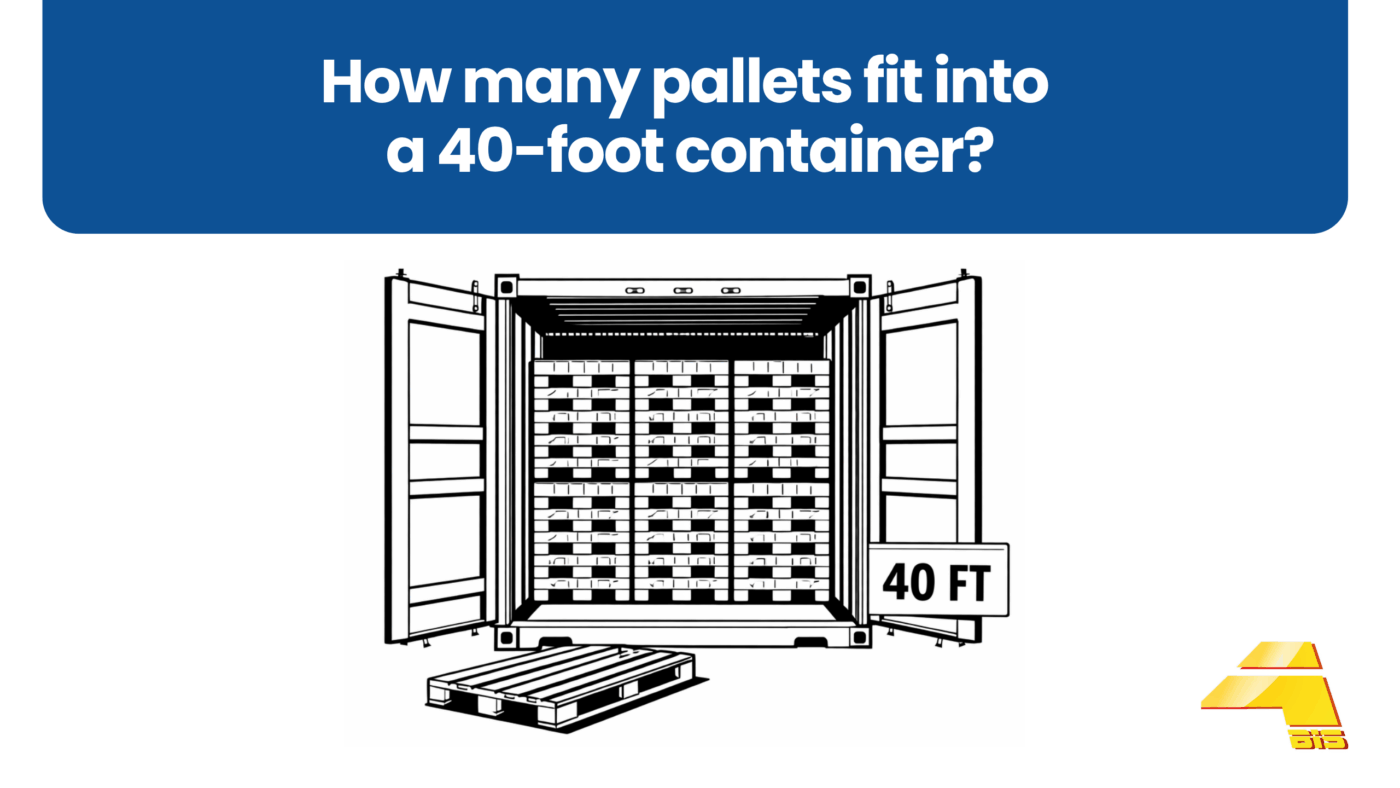
How many pallets go into a 40-foot container?
The 40 ft container holds 20-21 Euro pallets in a single layer, or up to 40 pallets when loaded in piles. Internal dimensions are 12.03 m long × 2.35 m wide × 2.39 m high. The High Cube container (40 ft HC) has a higher interior space – 2.69 m – which allows for higher loading. For a full breakdown of the dimensions and number of pallets, see the article How many pallets go into a 40 ft container.
Curtain or tarpaulin trailer – which one to choose?
The curtainsider trailer allows side loading with a forklift, which speeds up handling and makes it more versatile. However, it costs more – the price of a new curtainsider is between PLN 120,000 and 180,000. A tarpaulin semi-trailer is cheaper to buy by 20-30%, but it is loaded only from the rear or from the top. For more than 90% of general cargo, a curtainsider works better. We describe the comparison with examples for specific cargoes in the article curtain or tarpaulin trailer – key differences.
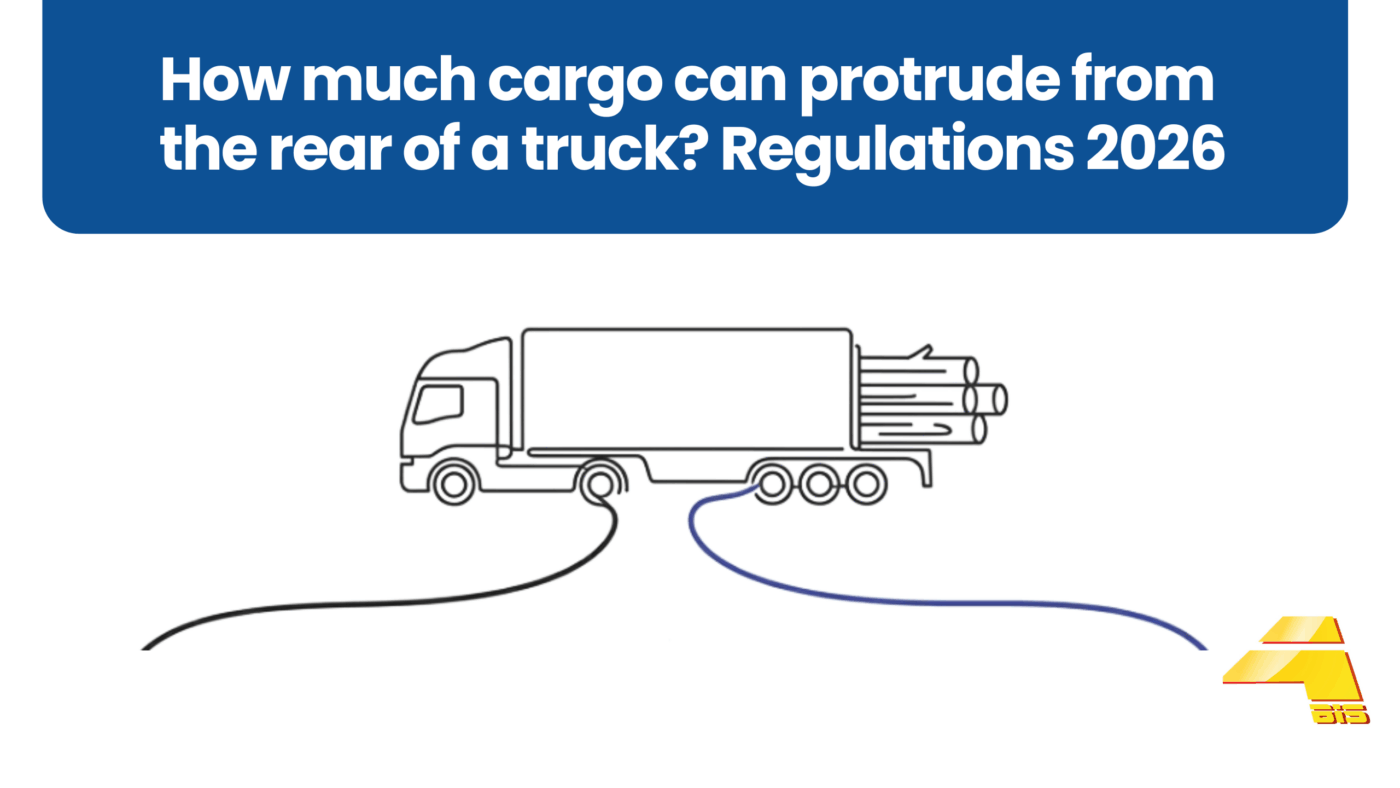
How much can the cargo stick out from the back of the truck?
According to Polish regulations, cargo can protrude from the rear of the vehicle by a maximum of 2 meters beyond the rear edge. When protruding more than 1 meter, it is necessary to mark the cargo with a red and white warning shield. When projecting more than 2 meters, an oversize permit is already required. Details, exceptions and marking patterns are described in the article how much cargo can protrude from the rear of the truck.
Order acquisition and transport exchanges
What is a transportation exchange and how to use it?
A freight exchange is an online platform that connects carriers with shippers and companies looking for transportation. The largest exchanges in Europe are TimoCom, Trans.eu and Teleroute. A TimoCom subscription costs from about 150 euros per month. In order to successfully win orders, it’s worth registering on several platforms at the same time, responding regularly to offers and building ratings as a reliable carrier – the key to permanent contracts and higher rates.
How can a manufacturer find a transportation company?
A manufacturer looking for a carrier can post an ad on freight exchanges, contact a freight broker or use bidding platforms. For regular shipments, a fixed contract with one or more carriers is the most advantageous – it gives stable prices and deadline certainty. It’s always a good idea to verify a transportation company’s license and liability insurance before signing a contract. For a practical guide for manufacturers, see the article Manufacturer seeks a carrier – how to find a transportation company.
ADR transport and hazardous materials
What do you need to know about hazardous waste transportation?
Transportation of hazardous waste is subject to the ADR agreement and the Law on Waste. The driver must have a valid ADR certificate, and the vehicle must be properly marked with orange plates. Transportation of hazardous waste without the required documents is punishable by a fine of up to PLN 10,000. Detailed requirements, waste classification and sample documents are described in the article Transportation of hazardous waste – what it looks like and what you need to know. In turn, you will find templates of ADR written instructions in the article ADR written instructions – template, description, graphics.
Subsidies and costs of transport activities
What subsidies are available to transportation companies?
Transportation companies can take advantage of subsidies for the purchase of vehicles from the EU’s FENG and FEnIKS programs, leasing with subsidies from labor offices, and preferential loans for SMEs by the Bank Gospodarstwa Krajowego (BGK). Grants for the purchase of low-emission vehicles (LNG, CNG, electric) funded by the National Reconstruction Plan are particularly available in 2026. For a full overview of the programs and application instructions, see the article Road transportation subsidies – Transportation subsidies.
Logistics, ports and containers
What are the largest container ports in Europe?
The largest container port in Europe is Rotterdam, with over 14 million TEUs handled annually, ahead of Antwerp-Brugg(about 12 million TEUs) and Hamburg(about 8 million TEUs). Polish ports – Gdansk and Gdynia – are growing dynamically and entering the European top. For a full list of the TOP 15 container ports with map and handling data, see the article The largest container ports in Europe – TOP 15. For information on depots and container management, see the article Depot and containers.
13
Mar
Mar
TIR transport price per km 2026 depends not only on the length of the route, but also on fuel, e-TOLL, foreign tolls and availability of return cargo. Check out current domestic and international rates, sample route quotes and the most important factors affecting the cost of transportation.
11
Mar
Mar
TIR transport price per km 2026 depends not only on the length of the route, but also on fuel, e-TOLL, foreign tolls and availability of return cargo. Check out current domestic and international rates, sample route quotes and the most important factors affecting the cost of transportation.
09
Mar
Mar
TIR transport price per km 2026 depends not only on the length of the route, but also on fuel, e-TOLL, foreign tolls and availability of return cargo. Check out current domestic and international rates, sample route quotes and the most important factors affecting the cost of transportation.
03
Mar
Mar
TIR transport price per km 2026 depends not only on the length of the route, but also on fuel, e-TOLL, foreign tolls and availability of return cargo. Check out current domestic and international rates, sample route quotes and the most important factors affecting the cost of transportation.